- RSS FeedSubscribe
- « Previous PostFree Stuff Fridays
- Next Post »A Minister's Bible
False Reverence
- 09/12/09
- 20
Here is a great (and famous) quote from Mortimer Adler's classic How To Read a Book.
*****
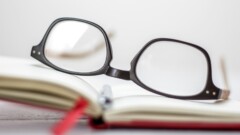
There are two ways in which one can own a book. The first is the property right you establish by paying for it, just as you pay for clothes and furniture. But this act of purchase is only the prelude to possession. Full ownership comes only when you have made it a part of yourself, and the best way to make yourself a part of it is by writing in it. An illustration may make the point clear. You buy a beefsteak and transfer it from the butcher's icebox to your own. But you do not own the beefsteak in the most important sense until you consume it and get it into your bloodstream. I am arguing that books, too, must be absorbed in your blood stream to do you any good.
Confusion about what it means to "own" a book leads people to a false reverence for paper, binding, and type -- a respect for the physical thing -- the craft of the printer rather than the genius of the author. They forget that it is possible for a man to acquire the idea, to possess the beauty, which a great book contains, without staking his claim by pasting his bookplate inside the cover. Having a fine library doesn't prove that its owner has a mind enriched by books; it proves nothing more than that he, his father, or his wife, was rich enough to buy them.
There are three kinds of book owners. The first has all the standard sets and best sellers -- unread, untouched. (This deluded individual owns woodpulp and ink, not books.) The second has a great many books -- a few of them read through, most of them dipped into, but all of them as clean and shiny as the day they were bought. (This person would probably like to make books his own, but is restrained by a false respect for their physical appearance.) The third has a few books or many -- every one of them dog-eared and dilapidated, shaken and loosened by continual use, marked and scribbled in from front to back. (This man owns books.) ...
But the soul of a book "can" be separate from its body. A book is more like the score of a piece of music than it is like a painting. No great musician confuses a symphony with the printed sheets of music. Arturo Toscanini reveres Brahms, but Toscanini's score of the G minor Symphony is so thoroughly marked up that no one but the maestro himself can read it. The reason why a great conductor makes notations on his musical scores -- marks them up again and again each time he returns to study them--is the reason why you should mark your books. If your respect for magnificent binding or typography gets in the way, buy yourself a cheap edition and pay your respects to the author.

I am a follower of Jesus Christ, a husband to Aileen and a father to three young children. I write books and blogs for fun while doing web design and consulting for a living. I worship and serve at 
Comments (20)
I guess I shouldn't be feeling so embarrassed about the condition of my books after all!
I started marking up my books a little while back and it feels so liberating - I wish I started it long before
Good quote. I like the comparison you make between books and a score of music, and the contrast between books and a great painting. All can be great works of art, but their value is enjoyed and promoted differently.
I've found that, generally speaking, the more i am marking up a book in the margins and in the pages at the back the more I am learning.
I do not mark in books, but my primary motive isn't some respect for the ink and paper, but because I don't want to do anything that hurts readability, either my own or others. When I read a book that someone else has underlined or highlighted, it totally breaks the flow for me and I have trouble taking the book for what it says rather than what it the mark says about the person who underlined it. If I ever want to lend out a book, I'd hate to have it marked up so that the other person has any hindrance to their ability to read it. I guess if I had two copies of every book, one to mark up and one for casual reading, then I could allow myself to pull out a pen.
That said, my favorite books are very well worn and I am perfectly happy doggy-earing pages and adding small pieces of paper as bookmarks, since those don't affect readability. I'll also correct confusing typos or grammatical errors. If an open quote has no corresponding end and I know where it was supposed to be, I will mark it in the book so as to improve its readability for the next reader. Also when I taught middle-school science, we found a few errors in the book and I had the students correct those with pens for the benefit of future readers.
My kids made fun of me for weeks when they saw me reading How to Read a Book again. BTW--it is well worn, dog-eared, highlighted and scribbled through, like all of my re-readers. Rarely do I take the time to markup and truly study a book the first time through. I liken that to devouring. I save the savoring for the re-reads.
Adler's primary point, namely that we should read books rather than just possessing them or skimming them, for example, is valid. But on the issue of marking books, I'm more in agreement with Kyle.
I do a lot of work in apologetics (in my free time, not professionally). One of the most significant books to come out in recent years in that field is Richard Bauckham's Jesus And The Eyewitnesses (Grand Rapids, Michigan: Eerdmans, 2006). I've read it, and I've reread some portions of it, and I've thought about the book and cited and quoted it many times. But my copy doesn't look much different than new. Some of my books do get visibly worn from use, and some books I keep in my car deteriorate because of exposure to the weather. But, as Kyle said, it makes sense to think of future readers of your books when using them. Giving people books is an effective method of evangelism and furthering other people's sanctification. They probably don't want your books to be dirty, torn, highlighted, inscribed with notes, etc.
And how are you supposed to use notes written on the pages of a book? If you remember reading about subject X in book Y, what good does it do you to have a vague recollection of having read about subject X somewhere in that book?
What I do, instead, is fold a blank piece of paper in half and use it as a bookmark. (Folding the paper makes it fit in the book better, and it gives you four smaller pages on which to write notes.) I write notes on the folded paper, beginning with the page number, followed by a description of the passage's location on the page, then a description of what I want to note. Here's an example of one of my notes from Bauckham's book:
389, top, scholarly neglect of John 15:27
That's a reference to page 389. The passage is at the top of the page. And it's about the neglect of John 15:27 in modern scholarship. If I remember having read about the subject in Bauckham's book, I can find the passage by taking the folded paper out (I keep the paper[s] in the front of the book, under the cover, after I finish reading the book.) and scanning over the notes. If I think I'm especially likely to want to return to a particular note later, I place a star on the edge of the paper, next to the note. And the notes should be detailed so as to be sufficiently useable later. For example, if my note above had just said "John 15:27", I might not remember what the passage says about John 15:27 if I consult the notes five or fifteen years after completing the book. Notes should be brief, but not too brief.
I'd also recommend keeping notes for some online works that you read. Some of my reading of the church fathers has been done online, for example. And it's worthwhile to take notes when reading the fathers. Since many online works don't include page numbers, you can use section numbers for your notes, such as section 3:39 in Eusebius' Church History. When you're done reading the work in question, write something like "Eusebius' Church History" at the top of the page, and put it in a folder, drawer, etc. with other notes of a similar nature.
This sort of approach makes it easier to remember what you've read, do research, and be more effective in doing work that involves a lot of reading and research (such as apologetics). It also keeps your books more useable for future readers.
I've seen Adler's advice about marking up books, and advice similar to it from other sources, repeated many times. It doesn't make sense to me. Why not do something like write notes on a piece of paper instead (and later type out notes and save them on a computer in cases where that's appropriate, etc.)?
I agree with Kyle that you cannot write in a book - it's just wrong.
If I take notes, they go in a notebook or blog or something. But I also rarely reread a book (at least novels and biographies) - why read it again when you already know the contents?
Commentary, non-fiction (except biographies), and reference materials I'll reread. And, of course, I read different chunks of my Bible many times.
But marking the book makes it [nearly] impossible for someone else to derive any benefit from.
I write in any book I find useful. It is almost compulsive. It is how I learn and interact with the text. My husband almost never writes in his books. He has tried, because he thinks it's a good idea. He's got nothing against the practice. But he tells me he gives up after a few chapters. It's just not his "thing".
The other day I read an amazing quote to my husband from a Jonathan Edwards book. Later that day I found he'd used that quote in his blog. My first question was, "How did you find it?" He laughed, "Well, you wrote the topic of it right in the margin. I found it right away." I laughed too. I've always been rather embarrassed for people to see the condition of my books. If I love them, I love them to pieces, literally. My copy of the Rare Jewel of Christian Contentment has broken free from its binding into several loose sections.
I think the scrap of paper idea of Jason's is a fine one, if you can stand having scraps of paper all through your books and having to move them aside as you read, or fall out if you drop the book. That would drive me bats.
As far as future readers go, I don't expect there to be any, except perhaps some family member, who after my demise may actually enjoy reading my remaining scrawls. If I loan a book, they'll have to live with my marks. If I want someone to have a copy of a book I will buy them one, new, or find an unmarked used copy for them. BTW, I sell used books for a living (well - a fraction of a living). It's really easy to get hold of unmarked copies of books. I'll sometimes even buy one already marked. Unless the prev. owner was some kind of kook (which happens) I usually find the notations interesting and thought provoking.
Well, that's my $.02 on a topic near and dear to my heart.
Another factor to take into account is space limitation. How much can you write in the margin of a book, between lines, etc.? You should at least have paper with you to take notes when there's no space for it in the book. But it would be even better to place all of your notes outside of the book.
Laurie M. wrote:
"I think the scrap of paper idea of Jason’s is a fine one, if you can stand having scraps of paper all through your books and having to move them aside as you read, or fall out if you drop the book. That would drive me bats."
I'm referring to one piece of paper that's folded in half. That would give you four pages to write on. Some books may need more than one piece of paper for notes, but I'm not referring to "having scraps of paper all through your books and having to move them aside as you read, or fall out if you drop the book".
I agree that there are some advantages to writing in books. Sometimes it is beneficial to read other people's notes, for example. But I think the other approach is better overall.
Jason, I think we've come down to personal preference. I prefer to write in my books as it suits my purposes. I would not like to keep a paper in the way you speak, because I like the note to be right next to the text at all times. It suits the way I think and remember things. And truth be told, I LOVE writing in my books. If I borrow a book and find I really like it, I will go out and buy it specifically so I can write in it. Not being able to write in a book makes me feel handcuffed. I can do it, but I don't like to. Writing in a book I love is one of the great joys of my life.
As to notes, I do write some down on paper or the computer, but generally only if I'm doing a formal study or writing about the subject matter found in the book. I have more than 50 pages of typed notes on The Rare Jewel for which I prepared a study. I will soon have that many for the book I've just finished. But before I write on paper, I read the whole thing through, marking and writing in the margins as I go. Just thinking about it makes me smile.
So, I think the important thing is that each person has a means of interacting with the text that suits the purposes they have in mind, and the way their own mind works. And let me end by saying that as one who sells used books you are just the kind of book reader I adore. I, on the other hand, am my own worst nightmare, but I wouldn't have it any other way.
The only books I own which look worn are those that I've lent out to others. I'll admit, I DO have a reverence or respect or even love of quality paper and a fine binding and many of my books reflect that. That makes up half of the reason I don't like to write in my books, the other half is similar to Kyle: The insights I glean from a book the first time through are not always the same as I'll find on subsequent readings. If I have markings in the book, I'll get caught up in what I was taking from it previously and not learn anything new (the whole reason for reading again if not for fun).
So instead, my system is similar to Jason's, I use a notecard as a bookmark and write page numbers and portions of the text of interest on it as I read and keep that with the book. More detailed notes are kept in a Google Notebook so that I can access it anywhere I'm online.
In reading your premise here, I understand what you are getting at. However, I am not sure I agree. I don't think the dog-eared, highlighted, penned, folded, spine busted book is any more owned then my shiny pretty books. Because by the same premise I would own the blog with this comment would I not? Physically it is existing on my computer screen, I am typing on it, it is mine. But would you not say it is yours?
If you possess the book and have the rights to proclaim it yours then yes, you own it. However, to be invested in a book would be closer to your premise, where in effect the book owns you then perhaps? Just a thought
oh my!!!! I loved this post... I was raised to never "dog-ear" books, "never write" in them as these were signs of disrespect....at least to a maternal uncle, who meddled too much in his sister's business. My mom's rule was to never open a box of cereal unless the on sitting on the fridge was completely done!!!
Silly rules we grow up and and although it has taken years to unwind the effects of my uncle and my mom... I now write, comment and highlight my books... all my books including my Bibles!!!And yes, I open and enjoy a variety of cereal in the morn.....
thanks Tim....
My husband had the opportunity to meet J.I. Packer several years ago. He presented Dr. Packer with his very worn, heavily notated copy of "Knowing God" to sign. Dr. Packer smiled gently and said "I so love signing copies of my books that people have actually read."
Ever since my husband told me that story, I'm a devote note taker and dog-earer. :)
Great quote. I live in my books. Might be because I am a slow and deliberate reader.
Let's remember not to "sanctify" marking in books, either. Read books and whatever helps, do it. Love you all!
I agree with Kyle. I never write in books. I also am greatly distracted by others' notations and highlighting. I do, however, find it fascinating to discover bookplates or other proofs of previous ownership written or placed within the first page or two, and I do mark my own there.Perhaps it is my occupation as a librarian that makes me respect the physical attributes of a book and want to keep it in as near original condition as possible. (But, I, too, am not opposed to dog-earing, or carefully correcting typos!:>)I am also a book collector by hobby. I am very fussy about the literary quality of the books I collect, but also look for a copy in good condition that I can help to preserve for posterity. If everyone does as Adler suggests, there would be no 'decent' copies of, for example, my 1911 edition of "The Poetical Words of George MacDonald" for future generations to read and enjoy. And, Tiffany, I like your sensible remark. We are so apt to take everything to the extreme, aren't we? :)
Thinking that the paper and ink are "too precious" to be marred by writing is indeed a bad reason not to. But as others have pointed out, there are other reasons not to, so it's good to be careful about assuming why a particular person wouldn't do it. In my case, I once heard someone long ago comment that he didn't like writing in his bible because he intended to keep it for a long time, and he didn't want to be stuck, years later, with his possibly immature or erroneous take on things. Of course this is a more trenchant issue with the Bible than with other books, but for me, it applies to all books -- not necessarily the concern that I'd write something "wrong," but that my writing would overshadow that of the original author, and instead I'd like to be able to regard the author's original words on their own each time I come to them, not be constrained by my own previous thoughts on them. That's no more than a personal preference, but it's another example of how keeping a book pristine might arise from concerns other than a reverence for materials (which I have also witnessed) and not be working against one's "ownership" of the book.
In spite of all my love for writing in books, let it be clear that there are times when it is entirely inappropriate to do so, namely, when the book does not belong to you, or....
Well, we are in the midst of reconfiguring our personal library, which led my DH to do a post about some of his books. There ARE many books I would never dream of writing in: http://ticklemebrahms.blogspot.com/2009/09/odd-volume.html