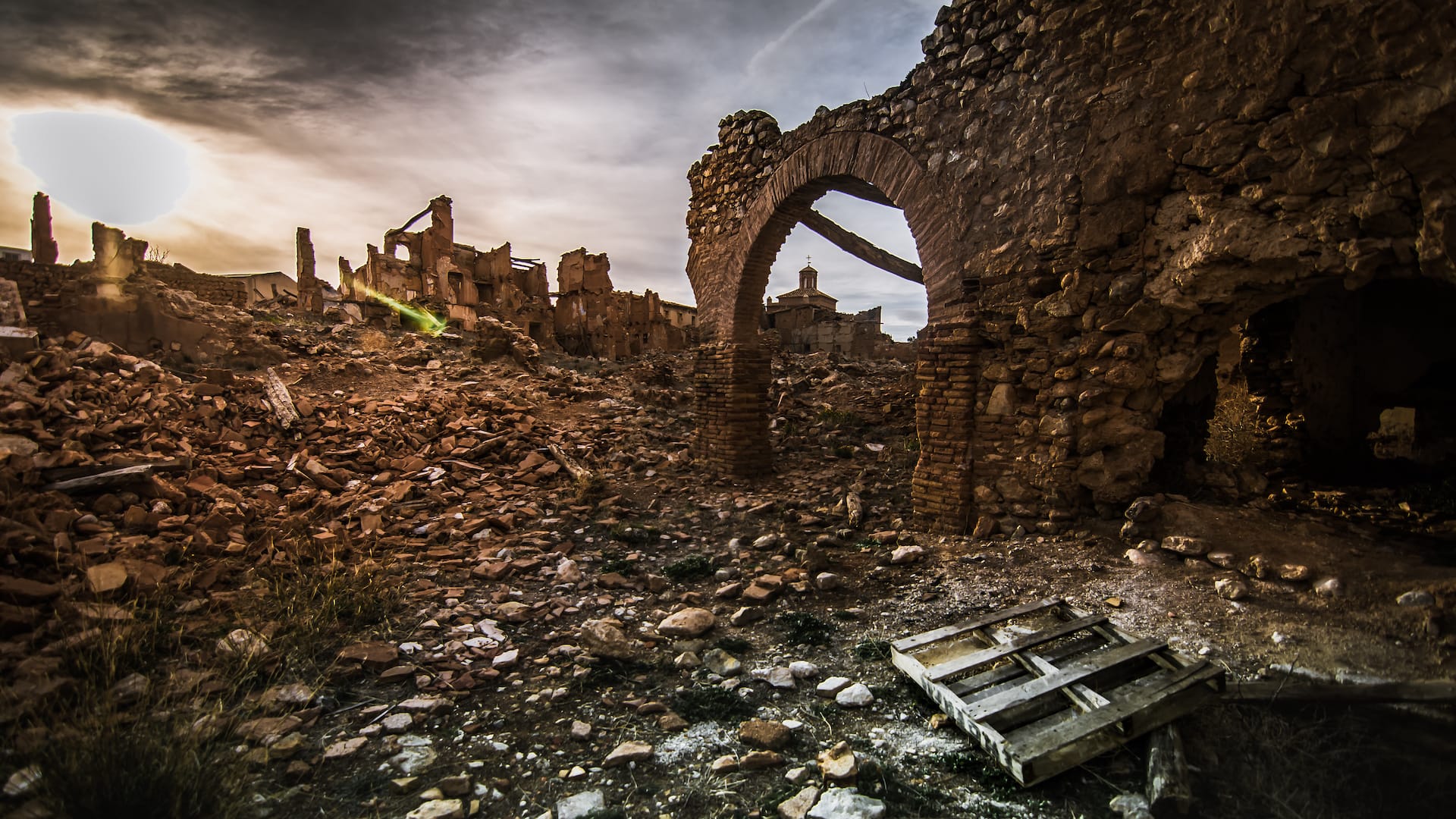
Not too long ago I read that the mysterious artist Banksy had created several new murals in Ukraine. Going to locations that had experienced the fury of war, he found broken and damaged buildings and used them as his canvas. In one a gymnast practices a handstand upon shattered walls and in another a woman who is wearing a bathrobe and who has curlers in her hair and a gas mask on her face holds a fire extinguisher next to a blown-out window. I am not clever enough to know what they all mean, but I do understand that the artist means to make a statement about the war and its many victims.
I understand this as well: that by creating these murals, Banksy has made something valuable out of what would otherwise be valueless. What was only busted-up concrete has now become an intriguing and desirable work of art. Though his canvas was one for which no one else could see any value, and though it had been assaulted and destroyed, it is now valued and treasured.
And it’s not like just anyone could do this. Had I been assigned the task I am quite certain that I would have made the mess even messier. I would leave the rubble even less valuable and less beautiful than before, for I have no artistic talent and no ability to bring beauty from literal ashes. It takes a skillful artist to work in the medium of rubble.
We are a stained and torn canvas, a broken and battered block of marble, a shattered pile of rubble.
There is something remarkable about this, isn’t there? In the hands of a skilled artist, something broken can become beautiful, something valueless can become worth a fortune. And there is something remarkable about considering that this is what God does with us. We are a stained and torn canvas, a broken and battered block of marble, a shattered pile of rubble. Yet we are the medium upon which God chooses to display his glory.
God takes what has been purposefully destroyed, what has been willfully ruined, what has been blown up by our own acts of sabotage, and he works upon it until it is a beautiful and precious work of art. He takes what was valueless and gives it great worth, he takes what was wrecked and wonderfully restores it, he takes what was once evidence of our rebellion and transforms it to be evidence of our joyful submission.
The divine Artist is making all things new and bringing beauty from the ashes of our wrecked and ruined lives. We are the canvas upon which he displays his love, his power, his ability to redeem and restore even that which seemed to be beyond all hope.