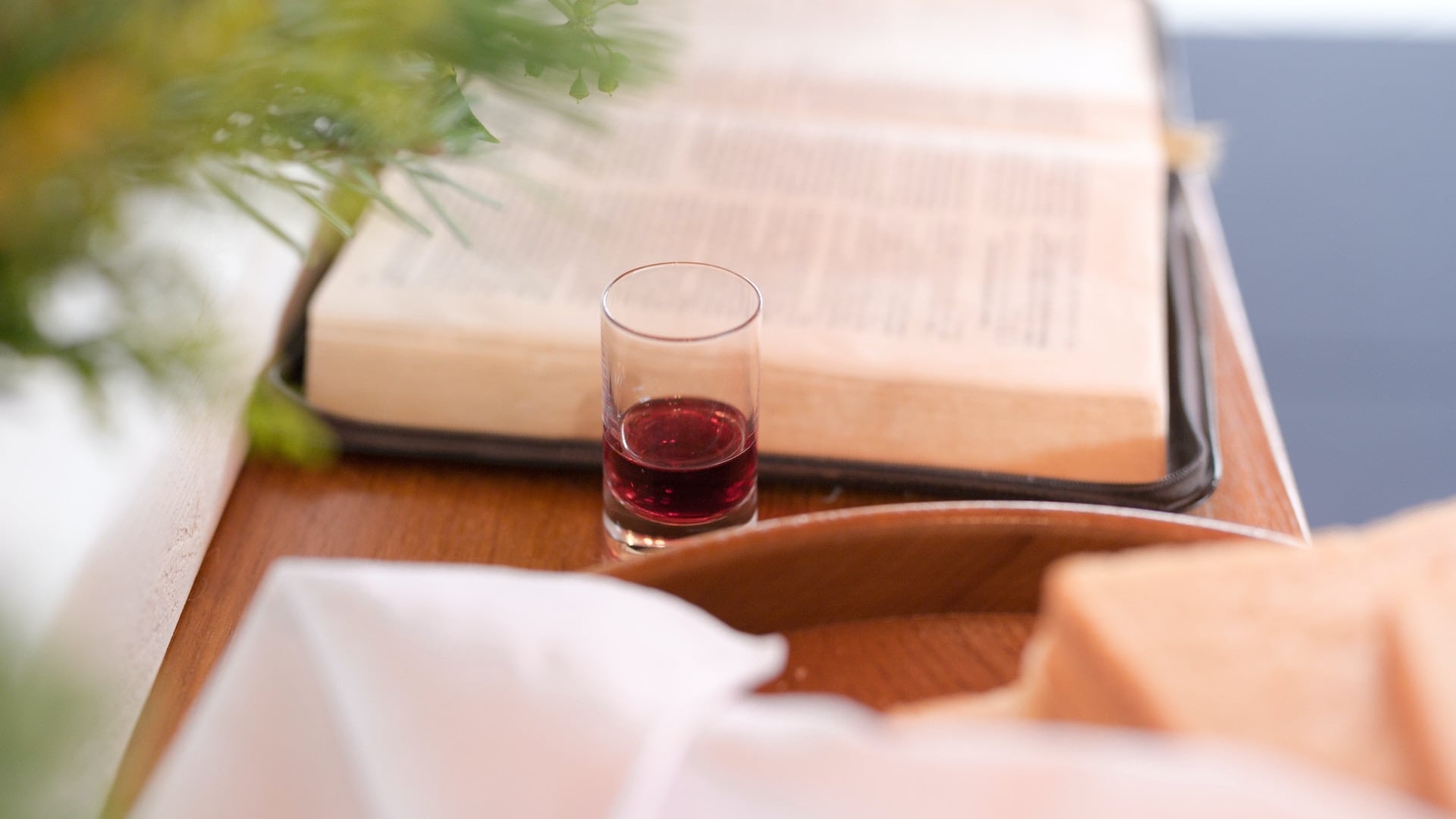
Recent conversations with other Christians have shown that I’m not alone in carrying an unusual level of stress, fear, and anxiety. These are uncertain days and many of us are struggling through them in various ways. Some are feeling this struggle as a heavy emotional weight, some are feeling it as despondency or listlessness, some are feeling it physically as cold sweats or a tightening of the chest. And no wonder! We are quarantined within our homes, we are adapting to unwelcome new realities, we are setting new patterns, we are facing a future that is uncertain, we have no idea when or if we’ll return to some semblance of normalcy. In the face of all this, perhaps it would be a surprise if we did not experience some anxiety and feel some measure of stress.
Though God may extend his grace through other means, he promises he will extend it through these ones.
Thankfully, God knows this life will often be difficult and in his grace he has provided what we need to endure all our trials. God sanctifies, strengthens, and sustains his people through means, through disciplines or habits. But which means? Christians have long referred to “the ordinary means of grace” and defined them as Word, prayer, and sacraments. Though God may extend his grace through other means, he promises he will extend it through these ones. It is as we commit to these habits and practice these disciplines that God equips, strengthens, and assures his people.
A unique element of this pandemic is that it has forced Christians to stop meeting together. Consequently, some of the very means God has provided for our support and strengthening in difficult times have been denied to us. It’s not just our ordinary lives that have been disrupted, but also these ordinary means. And I can’t help but wonder whether some of our anxiety, some of our stress and fear, is not because of what has been added to family, vocation, and life, but what has been taken away from fellowship. Never have these ordinary means of grace seemed so important; never have I missed them so much.
Here is how Ligon Duncan explains them and tells how they are tied to the local church. “These are the ordinances given by God with which spiritual life is nurtured. By ordinances we mean spiritual instruments of grace and growth in grace appointed by God in the Bible. So, when we say ordinary means of grace-based ministry, we mean a ministry that focuses on doing the things God says are central to the spiritual health and growth of his people. Hence, the key things that the church can do in order to help people know God and grow in their knowledge of God are: (1) emphasize the public reading and preaching of the Word; (2) emphasize the confirming efficacy of the sacraments; and (3) emphasize a life of prayer, especially expressed corporately in the church.”
While we are still able to participate in some of the means of grace individually and as households, it has been weeks since we have been able to enjoy all of them in the context of the local church gathering. Yet we know that we best grow in godliness in community, not in isolation. This is why the author of the letter fo the Hebrews writes, “Let us consider how to stir up one another to love and good works, not neglecting to meet together, as is the habit of some, but encouraging one another, and all the more as you see the Day drawing near” (10:24-25). It is in Christian community that we read the Word and hear it preached (2 Timothy 4:2), that we join our voices together in prayer (Acts 4:24), that we sing praises to God (Colossians 3:16), that we bear one another’s burdens (Galatians 6:2), speak truth to one another (Ephesians 4:25), and encourage one another (1 Thessalonians 5:11). It is here that we celebrate the ordinances of the Lord’s Supper and baptism, and here that we experience the blessings of church membership and the redemptive love of church discipline. Local church fellowship provides the context in which God pours out his sanctifying grace upon us and through us. It is a context which, for now, has been denied to us.
While we can be sure that God will not punish us for what is not our fault, we can also expect that we will begin to feel the lack of it.
The Bible knows nothing of Christians who willfully separate themselves from Christian fellowship. Why? Because such people will inevitably wilt and perish. They cannot thrive or survive when they cut themselves off from the means God has appointed for his people. Yet at this strange moment in time, masses of Christians have been unwillingly separated from Christian fellowship. While we can be sure that God will not punish us for what is not our fault, we can also expect that we will begin to feel the lack of it. We will begin to feel the distance from the body we have been joined to and the means we have been given. We were not meant to live out the Christian life alone and without hearing the Word read to us, without joining together in prayer, without teaching and admonishing one another by singing psalms, hymns, and spiritual songs, without watching baptisms, and without celebrating the Lord’s Supper. The very means meant to sustain us in times like this are the means we cannot have.
So as I consider the stress and anxiety I feel deep within, and as I speak to others, I have been encouraging them as I’ve been encouraging myself, to understand that some of this must stem directly from what, in the providence of God, has been denied to us in this time. We should not expect to be without struggles when such important elements of our faith have been taken away by circumstances. I pray that this will provoke a longing within me and deep within the church to return to fellowship so we can once again return to those precious means. I pray that when we can finally meet together again, and when we can once again pray and preach and sing and baptize and break bread, we will not fail to treasure these precious means which are so ordinary, so beautiful, and so necessary.