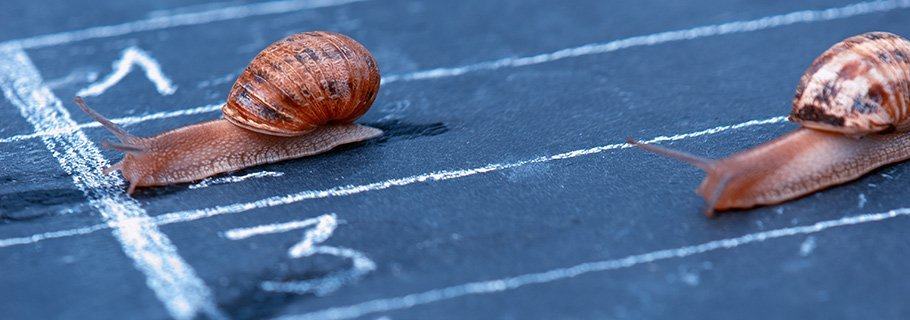
I have been thinking about this one a lot, lately. I was thinking about it long before I read Manage Your Day-to-Day, but that book helpfully distilled it to a single sentence: “We tend to overestimate what we can do in a short period, and underestimate what we can do over a long period, provided we work slowly and consistently.”
This is our temptation in all areas of life: to look for the quick fix, to look for the one or the few great moments that will accomplish more than the hundreds or thousands of smaller moments. “Anthony Trollope, the nineteenth-century writer who managed to be a prolific novelist while also revolutionizing the British postal system, observed, ‘A small daily task, if it be daily, will beat the labors of a spasmodic Hercules’. Over the long run, the unglamorous habit of frequency fosters both productivity and creativity.”
The spasmodic Hercules: this is how many of us behave. We behave as if one moment of great activity can overcome a thousand moments of inactivity, as if one moment of taking hold of opportunity will overcome all those moments wasted. The unglamorous habit of frequency is what makes up so much of life’s progress. Yet we are constantly tempted to put our hope in the brief and the glamorous.
I see this in work. We are prone to believe that unless we can block off a significant piece of time to work on that book or project or task, we may as well not even bother. So instead of doing a little work, and advancing a step or two, we let it lie dormant and perhaps waste that time instead. We tend to overestimate what we can do in a short period, and underestimate what we can do over a long period, provided we work slowly and consistently.
I see this in parenting. We invest great hope in the big moments, the weekend away with the child or the special night out. But we may neglect those hundreds of evenings where we could simply talk while doing the dishes or where we could pray for just a few moments before bed. We tend to overestimate what we can accomplish in their lives in a short period, and underestimate what we can accomplish over a long period, provided we are willing to advance slowly and with consistency.
But most of all, I see this in spiritual growth. We are often tempted to believe that one moment of great spiritual intensity will bring about greater and more lasting change than the oh-so-ordinary means of grace. We can have more confidence in the single three-day conference than in the day-by-day discipline of Scripture reading and prayer, the week-by-week commitment to the preaching of the Word and public worship. We tend to overestimate how much we can grow in a short period, and underestimate how much we will grow over a long period, provided we simply take hold of God’s ordinary means.
This is where so many Christians lose their confidence—they want quick growth and measurable results, and give up far too soon. Their confidence is not in God working through his Word as they open it each morning and hear it preached each Sunday, but in the big conference later in the year, or in that new devotional, or in that new study method. They are distracted and spasmodic rather than consistent and disciplined. They look this way and that, instead of than simply persisting in the means God prescribes.
Spiritual growth is no less real simply because it comes slowly and is difficult to measure.
The fact is, most growth in life—and spiritual growth is no exception—is measured in inches, not miles. The ground an army gains by a slow march is often safer than the ground it gains by charging over it. Spiritual growth is no less real simply because it comes slowly and is difficult to measure. In fact, quite the opposite is true.
Christian, persist. Persist in the ordinary means of grace. Persist even, and especially, when the growth seems to slow. Persist in your confidence that these are the means God gives for your good, for your growth, for his glory.
Snail image credit: Shutterstock





