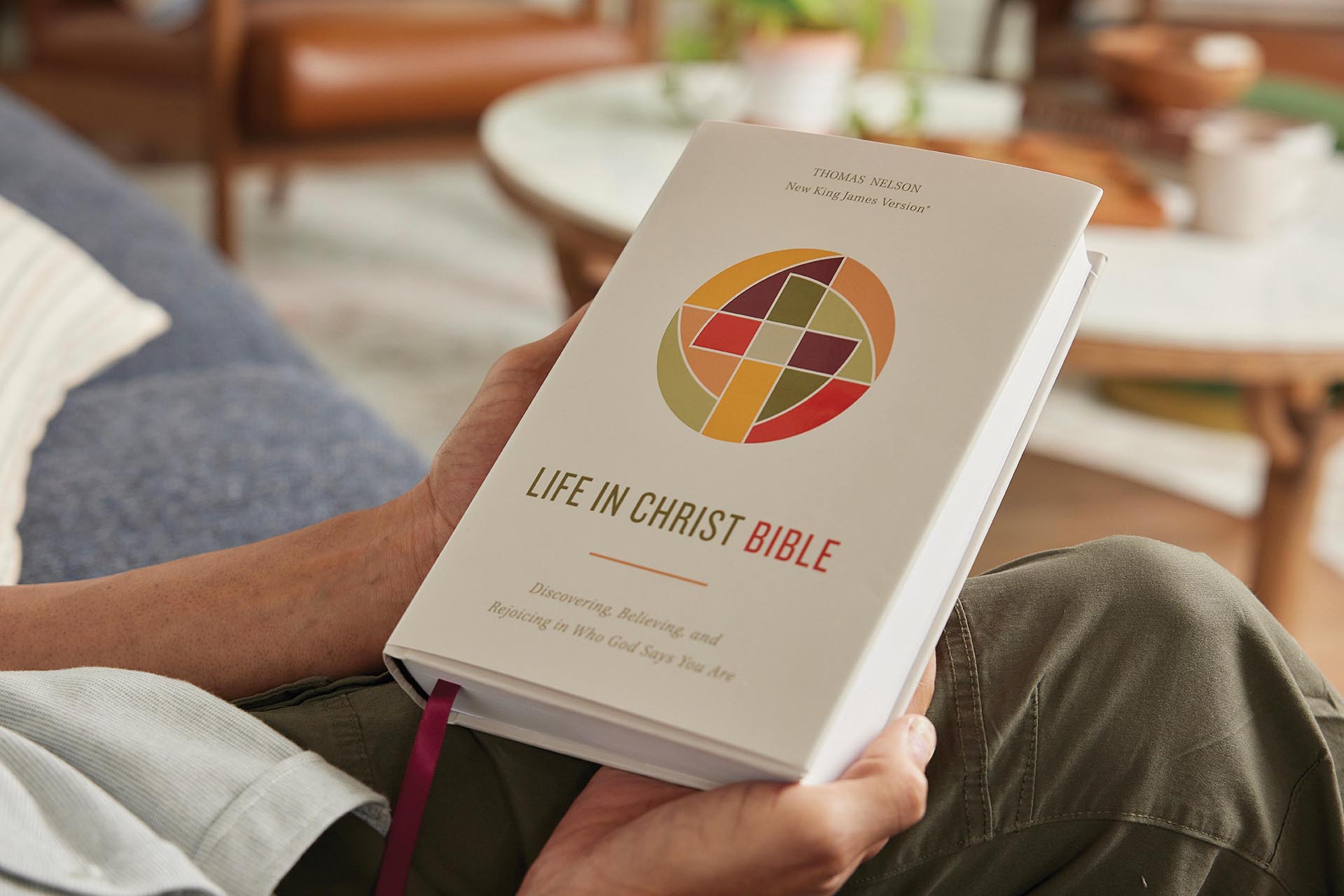
This week the blog is sponsored by Thomas Nelson Bibles and the Life in Christ Bible. This post features a Q&A with Brian Dembowczyk, Associate Publisher of Thomas Nelson Bibles, about how our lives are shaped by the stories we believe about our identities.
Brian, why does the concept of identity matter?
Identity matters for at least two key reasons. First, understanding our identity—our true God-given identity—is vital to understand why we exist and what we’re to do in life, as it is likewise essential for framing a fitting perspective of others. God created us as his image-bearers, unique from the rest of creation. This gives us, and everyone else, intrinsic value and points us to what we’re to do in life—basically to glorify God in all we do. While the specific ways we glorify God might vary for individuals, timeframes, locations, and cultures, that overarching goal is fixed for all of us. But to know how we are to do that, we need to know who we are. What we do should always come from who we are. And as Christians, we are image-bearers who have been made new in Christ. Christ not only saves us from sin, but he also gives us the capacity and the power to live as we were truly made to live.
Second, identity matters because we’re seeing increasing questions and distortions about it, both in our culture and in the church. “Who am I” is a question that has been asked since humans have existed, and it’s taking new forms today. So many people have questions. So many people are confused and hurting. So many people are looking for answers—answers that are found in Scripture.
Christians have written a great deal about this issue. How do you see this Bible adding to the conversation?
It’s true that much has been written on identity; it’s also true that much more can and should be written about it. While our basic understanding of identity is unchanged because it is based on unchanging Scripture, how we relate to this subject can change as culture changes. The Life in Christ Bible seeks to walk that balance of pointing readers to the unchanging nature of identity, while also speaking to modern issues related to it. More than that though, this Bible seeks to help readers see how interconnected this subject is with all of Scripture. This isn’t just a secondary doctrine; it’s a major one that the Bible addresses from cover to cover.
Identity matters for at least two key reasons. First, understanding our identity—our true God-given identity—is vital to understand why we exist and what we’re to do in life, as it is likewise essential for framing a fitting perspective of others. God created us as his image-bearers, unique from the rest of creation.
What aspect of this Bible are you most excited about?
That would have to be the identity notes, about one thousand brief notes showing how the subject of identity runs throughout Scripture. These notes are organized in three categories: (1) notes that show who everyone is as an image-bearer, (2) notes that show who we are as those made new in Christ, and (3) notes that show how we are to live out our God-given, Christ-restored identity. The hope is that these notes imbed identity-related orthodoxy (right thinking), orthopathy (right feeling), and orthopraxy (right living) in the reader.
How do you see this Bible encouraging people who are trying to navigate the many cultural conversations around identity?
There’s an adage that when you know the genuine article, you can spot any fake. For example, if you know real U.S. currency—the feel and look of the paper, the design, the ink used, and so forth—then you can recognize any counterfeit because it doesn’t measure up to the standard. That’s the big win of this Bible: Readers will come to know genuine identity and in doing so, they will be able to recognize any counterfeit identity they have given themselves or that has been given by others. That includes not just distortions of identity that we see today, but also improper priorities on secondary identity markers. But this Bible also features several chained articles on subjects that we believe will aid readers to navigate these contemporary conversations.
What takeaways do you hope people gain from reading and studying Scripture using the Life in Christ Bible?
In addition to what’s been shared, another takeaway would be for readers to find peace and joy in who they are. One of the guiding principles of crafting the content for this Bible was the goal that each time a reader closes this Bible, they should do so with a smile and with a sense of awe of God’s goodness. Another major takeaway was for readers to do something with their growing understanding of identity. Our faith is a performative faith—it is active. That means every time we go to God’s Word, we should walk away better motivated and aware of how to live more like who God made us to be and who we’ve been remade in Christ.
The Life in Christ Bible is available now. Learn more and try a free six-day reading plan at lifeinchristbible.com.





