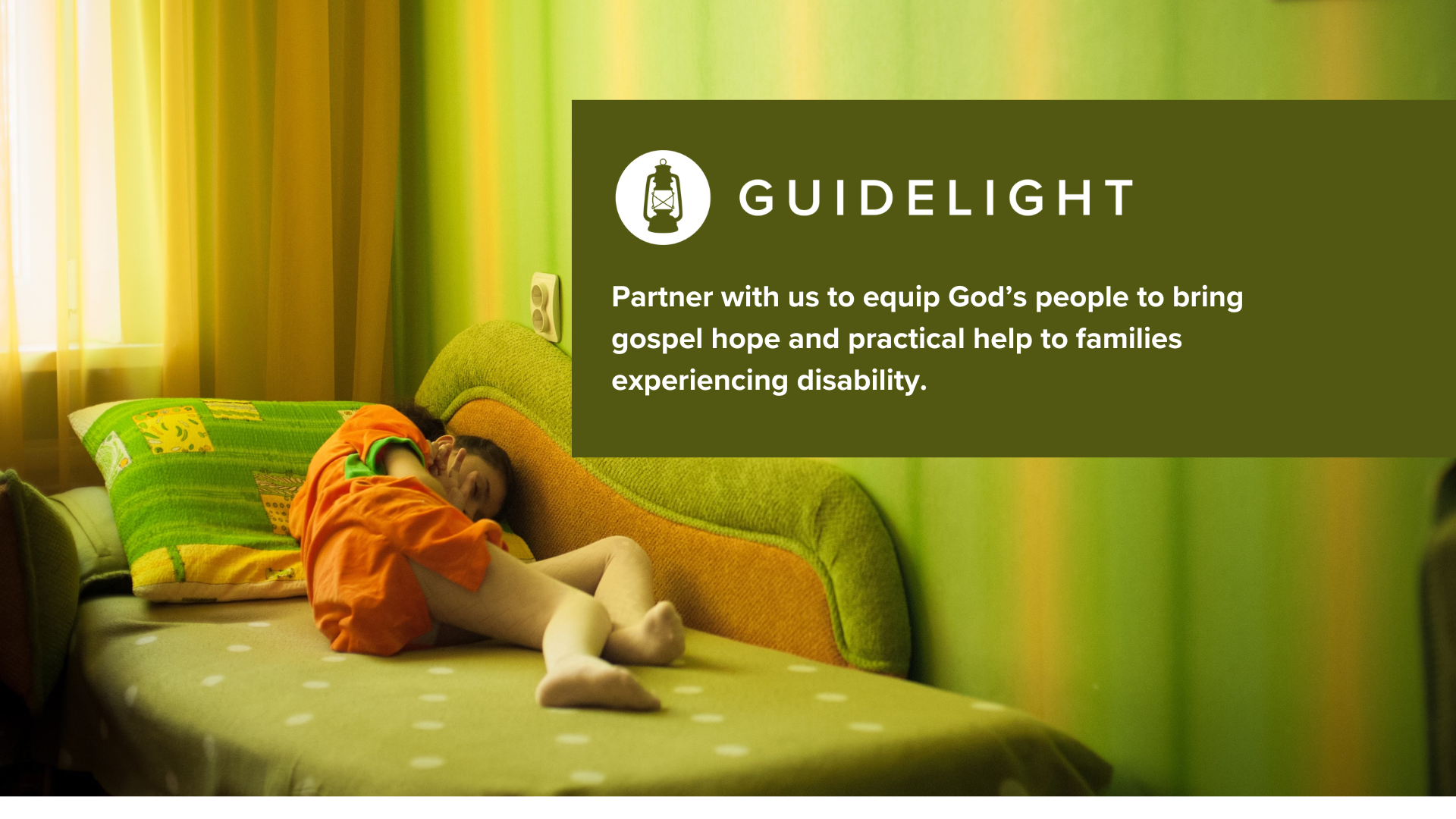
This sponsored post was provided by Guidelight, a ministry designed to shine a light for the world to see Jesus and the works of God in the lives of families and individuals experiencing disability. It was written by Greg Lucas, author of Wrestling with Angel, Bible teacher, and advisor for Guidelight.
“As Jesus passed by, he saw a man blind from birth. And his disciples asked him, ‘Rabbi, who sinned, this man or his parents that he was born blind?” (John 9:1-2)
One of the darkest and most difficult parts of being a special needs family is personal, cultural, and even spiritual isolation. For the person or family affected by disability it is much easier to stay hidden in obscurity than to be judged by the watching world. Isolation not only provides protection from the silent stares of spectators and onlookers, it keeps the messes, smells, and noises in-house where they are easier to deal with, and don’t have to be shared. For those struggling with disabilities, sometimes it is safer to remain unseen.
But Jesus will not leave us alone. He will not allow his people to be isolated. He will not permit his Church to pick and choose who is best suited—in body, mind, speech, and ability—for the Kingdom of God. He will not leave us blind to the works of God. It is of eternal importance, not only that we see, but that we are seen.
In John chapter 9 we are introduced to a man who was born blind. He was “blind from birth”, so blindness is all he has known. And being blind is all he is known for. Up to this point, he has lived his entire life isolated, marginalized, and judged for his disability. But in the providence of God, Jesus passes by, and in the blink of an eye, everything is changed.
“As Jesus passed by, he saw a man…”. And this seeing changes everything.
Jesus not only saw the man who could not see, he saw the man no one else took the time to see. The man was blind to the world and the world was blind to him. This man had no identity except for disability. He is given no name except that of the “blind beggar”. People looked through him, much like we look through modern day beggars today. Much like we often look through people with special needs today.
When faced with disability, it’s easier to keep moving, to look away, to be blind to the awkward interactions. But Jesus didn’t turn away.
When faced with disability, it’s easier to keep moving, to look away, to be blind to the awkward interactions. But Jesus didn’t turn away. Jesus stopped, and “…he saw a man”. He looked past the disability and saw the humanity. He looked past the problem and saw the person.
The disciples also saw a man, but they only saw his limitations. They saw his inability. In dramatic irony, they could only see his blindness. They looked past the humanity to try to find a reason for the disability. And with careless words from calloused hearts, they made a judgment of the man. “Rabbi, who sinned, this man or his parents, that he was born blind?” Their far sighted theology blurred the Imago Dei that stood right before their eyes.
And like he does for all who dwell in darkness, the Light of the World focuses their vision and illuminates their hearts. “Jesus answered, ‘It was not that this man sinned, or his parents, but that the works of God might be displayed in him.’”
Jesus sees something no one else can see. And he wants his followers to see it too. He wants the hurting world to see that there is purpose in the pain. He wants his Church to see that fearfully and wonderfully made is a promise to every image-bearer of God. He wants the Body of Christ to see that isolation is like amputation, and the parts of the body that seem weaker are actually indispensable. He wants every parent of every child with every form of disability to see his power and love—that the God who made man’s mouth, also in his providence, makes him mute or deaf or seeing or blind, in order that the works of God might be displayed.
The meaning of Jesus in John 9 is crystal clear. He is saying to the disciples, and he is saying to the blind man, and he is certainly saying to his Church: This blindness, this autism, this cerebral palsy, this Down syndrome, this fill in the blank—this disability, exists so that more and more of the greatness of God can be seen.
Perhaps this story isn’t about the blind man at all. Perhaps this story is about our own blindness to see what God is doing all around us. And maybe the greatest gift he can give us is not to heal our physical disabilities. Maybe the greatest gift he can give us is to heal our own spiritual blindness so we can see more of Jesus, and more of the great works of God.
Guidelight is a ministry designed with that purpose in mind—to shine a light for the world to see Jesus, and the works of God in the lives of families and individuals experiencing disability. One of our most important ministry missions is to lead families out of the darkness of isolation and into the body of Christ. Through bible teaching, respite, counseling, and care, Guidelight encourages families with the hope of the gospel and the purpose of God in disability “in order that the works of God might be displayed.”
Won’t you join us in carrying this light to the world? Visit theguidelight.org to learn more.