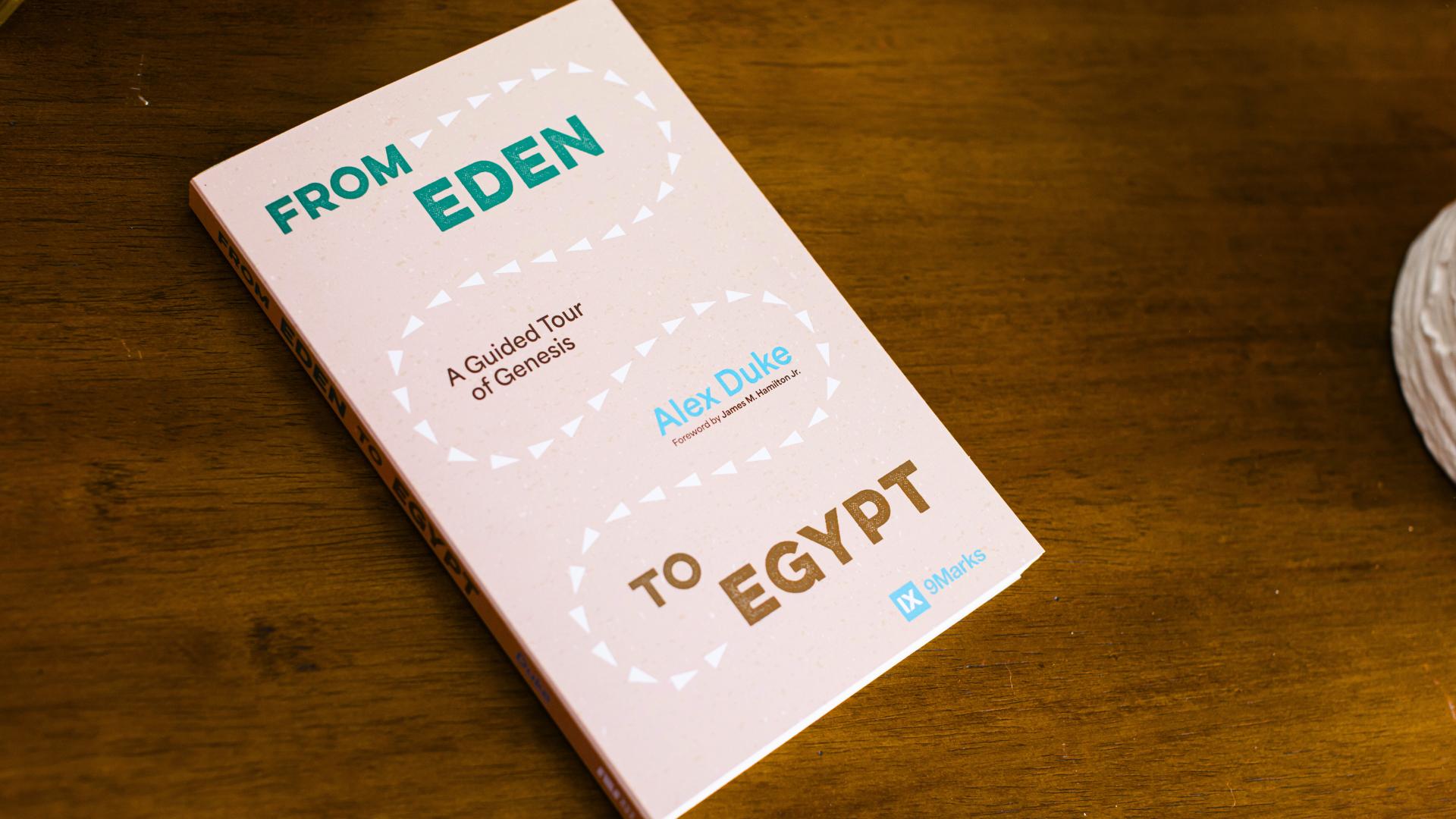
This week the blog is sponsored by Zondervan Reflective and the book From Eden to Egypt: A Guided Tour of Genesis. Written by pastor, 9Marks managing editor, and podcast host of Bible Talk Alex Duke, this book invites everyday readers to explore the wonders and weirdness-es of Genesis without intimidation. Learn more at FromEdenToEgyptBook.com.
In his recent Netflix stand-up special Your Friend, Nate Bargatze, the titular comedian makes fun of stupid people like me who buy too many books:
I like the idea of reading. I even buy books. But these books are the most words. It’s every book, you just open it and you’re like, “What are you talking about?” I mean, and they don’t let up. Every page, just more words. Why don’t you put some blank pages in there? Why don’t you let me get my head above water for two seconds?![1]
Do you know what book I thought about when I heard this joke? The Bible. The Bible really is the most words, 757,439 of them to be exact.[2] To make things worse, the Old Testament makes up about 75% of those words. It’s long. It’s also, if I can speak straightforwardly for a moment, weird. Long and weird—that’s arthouse cinema, and that’s the Old Testament.
Because of this, I bet many Christians resonate with Bargatze’s joke. They open up the Bible and silently wonder, “What are you talking about?”
When the Bible vexes you, when it befuddles you, when it talks over your head or down to your sensibilities, simply lean in and look close.
How do we learn what the Bible’s many words are about?
There are lots of ways I could answer this question: join a healthy church that is marked by clear, faithful preaching. That’s probably the best answer. Here are some other, silver-or-bronze medal answers: acquire some worthwhile hermeneutical tools by reading books that mention stuff like “hermeneutical tools”; pray for wisdom; go to seminary; ask your mom and dad, or your bookish kid.
But I want to give you just a single piece of advice: lean in and look close.
When the Bible vexes you, when it befuddles you, when it talks over your head or down to your sensibilities, simply lean in and look close.
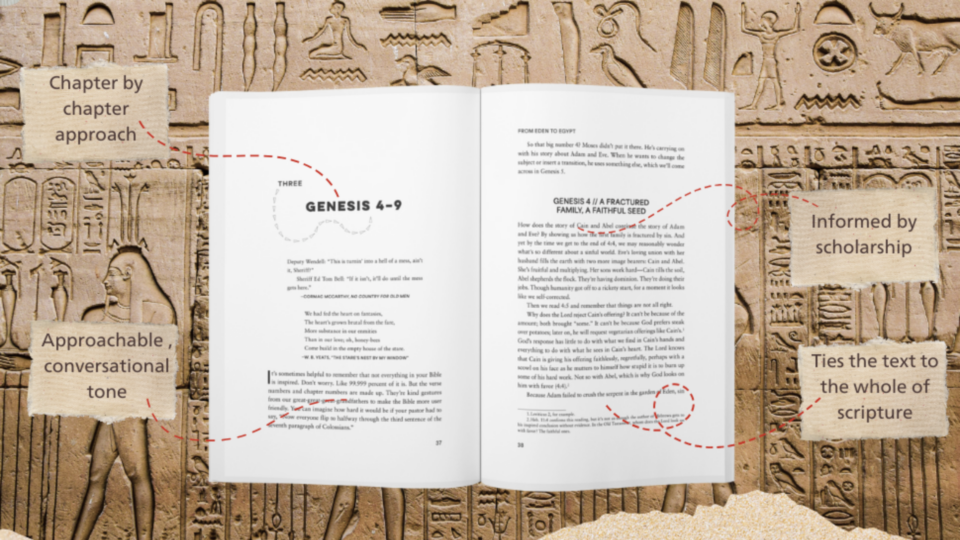
I just wrote a book called From Eden to Egypt, a book on Genesis for normal, everyday Christians. It’s not “in conversation” with anyone but the person reading it, helping them to see and to believe that the most important hermeneutical tool for reading the Bible is simply reading the Bible. In other words, the Bible teaches you to read the Bible. Reading Genesis teaches you how to read Genesis. We simply need to lean in and look close.
So why does Moses spend so much time on Abraham haggling back-and-forth with a random Hittite about the price of a dingy cave (Genesis 23) and so little time on, say, the birth of Isaac (21:1–7)? Put simply, because Sarah’s burial posed as much a problem as her barrenness. The latter called into question God’s faithfulness to deliver on his promise to give a son; the former called into question his faithfulness to deliver on his promise to Abraham and his lineage land. (see Genesis 12:1–3).
Or, why does Moses present the culmination of Joseph and his brothers with this dud of a detail? “Afterward his brothers talked with him” (45:15). That’s it? You spent seven chapters and this is all we get!? While that might seem like a dud ending, we should notice that it’s proof of reconciliation. Consider how Moses introduced their strife back in Genesis 37: “They hated him and could not speak a kind word to him” (37:4). Sometimes a mere conversation is proof of a remarkable change of heart.
When the Bible seems confusing, when you wonder what all those words are talking about, or what they’re doing there, or why the story isn’t unfolding the way you expected it to, don’t squint your eyes and skip ahead. Instead, lean in and look close.
[1] His delivery makes it sing, so you can watch it here on, gulp, TikTok.
[2] In the ESV. If you’re curious, the message has 726,109. The NASB appears to be the most verbose at 782,815 words.





