
A La Carte (12/18)

Multi-Site Churches
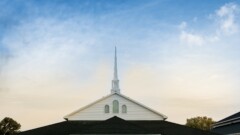
USA Today has an article about multi-site churches. “This form of high-efficiency evangelism allows thousands of worshipers to hear the same message from a lead pastor or a member of his team, in person or by video at three, five, even a dozen or more locations. Meanwhile, others take over the one-to-one side of ministry — counseling, ceremonies and small-group guidance.”
Children’s Bible iPhone App
“BCNmultimedia today announced the release of the ‘Children’s Bible’ iPhone and iPod Touch application, a full color comic book rendition of bible stories from the Old and New Testaments of the World English Bible.” There is only one story that is free, but it’s quite well done.
Browser Size Widget
Only web designers will care about this. But they’ll definitely want to file it away as a useful resource.
Glory to God on High
Michael Krahn has written a song for Christmas and has it free for the taking on his blog.

Comments (10)

1
Anonymous's picture

The multi-church or campus or whatever you want to call it , seems to becoming a trend. Will it last or be just a passing fad , who knows.

I’m on the fence about them. I know Driscoll and many others are having success with using this tool but I’m with Sinclair Ferguson on this one. I prefer smaller congregations , a real pastor in front of me and not a jumbo tron. But that could be a personal preference. But I still think each site should have a preacher .

2
Anonymous's picture

I’m with Reg. In this day where I can download any preacher to my Ipod, something seems wrong in sitting in a big room with a thousand people I don’t really know, listening to a guy who doesn’t know me any more than the preacher whose podcast I just downloaded. It seems my local church experience should be something much different.

3
Anonymous's picture

I tend to agree, but I might feel differently if my church was pastored by, say, John Piper.

4
Anonymous's picture

R.E. the Mulit-site churches:

Doesn’t this compromise the fundamental and Biblical purposes of a pastor? How in the world could a pastor effectively shepherd a congregation he never sees and has never met? Isn’t a little bit tacky just to outsource the requirements of your Biblical role? Why not just mentor some godly men to pastor the new site?

Just some initial questions. I am curious how these types of organziations are justified, from a Biblical point of view.

5
Anonymous's picture

Thank you for your insight, Monica. That is the way this (and everything else) should be filtered…through the Word of God.

When people come with their “personal preference”s, “I think”s, and “I like”s, it shows that they are filtering based on preference and opinion (and maybe popularity). You asked the right questions.

6
Anonymous's picture

I completely agree with Cheryl and Monica. As someone wisely noted several months ago, “John Piper is not my pastor”. I love reading his books, listening to his sermons and watching him on video - but he is not my pastor. To think otherwise is a disservice to me, to my actual pastor and to John Piper. Multi site churches sure seem closer to that scenario than to the effectively shepherded congregation Monica described.

Presumably the “solution” is to have small groups handle the 1 on 1 stuff. This is dangerous too. Small group leaders are not selected with the same high standards and degree of scrutiny as a church’s pastor is. To then fully place the shepherding burden on them undermines the entire pastor selection process.

7
Anonymous's picture

I know my church has started down the multi-campus path and I really don’t see much difference from this approach from simply being a large church with a single campus.

Once a congregation grows to a certain size (over 50? 100? 500?) the lead pastor simply can not provide individualized support and nurturing for every congregant while still performing the study and preparation needed to faithfully teach the word every week. As a result, he will build a team who can provide the more individualized attention to effectively shepherd the people.

So, while I don’t have real contact with the lead pastor, I do have men that are a part of his team that I can have direct contact with and who are invested in my spiritual development.

Multi-campus seems to simply be an extension of this. The campus that receives the weekly message by simulcast still has flesh and blood people who are responsible for the needs of the people and who are there to support and shepherd the people.

8
Anonymous's picture

I see what you are saying Denis and I am sure that is what many who have begun these types of endeavors believe.

However, I have been involved in two large churches. One has done an excellent job of retaining it’s Biblical role, as has the lead pastor despite its size. The other, however, has run into some serious issues because the excitement of having a large church with a well known pastor outweighed the desire to shepherd mature, disciples of Christ.

One area in which I see huge complications regards church discipline. Biblically, what authority does a small group leader have in disciplining one of their members? What authority does a pastor who is piped over television have? It is my fear that areas like this can quickly be glossed over, which can lead to serious spiritual implications for the church body if ignored or done improperly.

Is it difficult for a ‘popular pastor’ of a large or mega-church to continue in his God-given calling as shepherd, even if he has one campus? Yes. But I see it as nearly and almost totally impossible for a pastor to do so when he has so many satellites and campuses.

How is this different from me watching a pastor at home, other then I am standing next to people while listening to the sermon and singing worship songs? I think the overall purpose of the Chruch body is also lost.

9
Anonymous's picture

I can see how large churches can be done well or poorly; but I don’t see how that differs from a small church. The challenges are certainly different, but both large and small churches can fail the people they are supposed to be caring for.

The problem I see with your characterization of the large or multi-site church is that the authority structure you describe it skips from small group leader to lead pastor. In reality, these churches (at least the one I am involved in) have leadership, both staffed and volunteer, that provide leadership and oversight to varying sizes of groups allowing for a more direct involvement in what is happening in the body.

Using small groups as an example, there is a team of on-staff pastors who provide direct and individualized leadership and oversight for small group leaders. In turn, they are a part of the church’s leadership structure with appropriate leadership and oversight.

I can think of nothing about the model itself that would make a church unable to fulfil its purpose.

10
Anonymous's picture

I find this article very interesting. One thing is apparent….The day of using technology to be a part of the message is here!

Thanks for everyone’s insight.

Great blog!