Good morning from somewhere in rural Colorado. I’m here for the next few days for meetings and training, as well as a bit of hiking and photography and, best of all, some quiet times of writing.
Sales & Deals
Today’s Kindle deals include O. Palmer Robertson’s two-part Christ of the Consummation, which was commended by, among others, D.A. Carson, Sinclair Ferguson, and Joel Beeke. You’ll also find lots of great deals from Zondervan from books that are related to Protestant theology.
Recommended Reading
Can a Christian Be Demon-Possessed? I know there are many people who are concerned that, even though they are Christians, they may still be possessed by demons. Anthony Faggiano explains why that is not a legitimate fear. “Desire entices us; yielding gives birth to sin; sin grows toward death. Satan can tempt us, but we remain responsible for our desires and decisions. We cannot blame an indwelling demon for what Scripture traces to our sinful hearts. Yet God hasn’t left believers powerless. Through his Holy Spirit, we can begin to put sin to death and walk in obedience.”
7 Keys for Thriving in Lifelong Ministry. I enjoyed reading Joel Beeke’s keys for thriving in pastoral ministry. “Looking back over my ministry over the long term is much more encouraging than looking at it in the short term. A long-term perspective helps me see those who have been saved by the Spirit through my sermons, those marriages that have been strengthened, and even the fruitfulness of elders and deacons who were unsaved when I arrived at my church 40 years ago but have since come to know the Lord personally, vibrantly, and experientially.”
Why Does Everyone Else’s Life Seem Better Than Mine? There are some good insights in Zachary Conover’s article on comparison and envy. “Comparison has a way of making us dissatisfied with things we once received with gratitude. We can be thankful for our homes, our families, our work, and the opportunities God has given us. But then we see someone else’s life. We scroll through reel after reel, and suddenly our own begins to feel inadequate. Their opportunities seem greater. Their accomplishments seem more significant. Their circumstances seem more desirable. Am I the only one who doesn’t have it all together? Why don’t I have what they have? And without realizing it, we begin to measure the goodness of God toward us against what He has given to someone else.”
Put the Destination in the Frame. John Seel has a guest piece on Aaron Renn’s Substack that offers some helpful points on the way we talk about young men. “We are talking about men incorrectly. We frame discussions of men in terms of problems – the ‘crisis of boys and men’ or ‘failure to launch’ – rather than the destination we want men to arrive at. If we want a different outcome, we need to change the frame of our discussions about men to center on the new reality we want to create. We need a frame that naturally leads us to answer the key question: What kind of men do we want our boys to become?”
Welcome to the Valley of Pain. This article from The Atlantic points out, correctly, that the “safe internet” is shrinking and that we need to be more vigilant than ever. “For the next year or two, if not longer, the internet is going to feel a bit touch and go, and more dangerous than we’ve come to expect. ‘It’s going to feel like the sky is falling’ for a while, Prince said. There’s a decades-long backlog of bugs in software written without much review or scrutiny—which was more or less fine so long as there was a very small number of skilled hackers. Over the past two decades, companies, governments, and individuals have been lulled into a false sense of security: Most people don’t think twice about punching credit-card numbers into the website of a local restaurant or gift shop, or forking over a home address and phone number in just about any customer survey. But the internet was always a dangerous place. We’re just waking up from a trance.”
Adoption Is Not a Treatment for Infertility. This headline caught my interest, and I’m glad it did because I found the article quite compelling. Kirsten Upadhye believes it’s best that we don’t speak of adoption as if it’s a treatment for infertility. That’s not to say that adoption is anything less than good and glorious, but simply to point out that it’s unhelpful to regard it as many do when they discuss infertility. Read the article and I think it will challenge your thinking as well. (Also keep an eye out for the forthcoming documentary Frozen Orphans.)
Extra
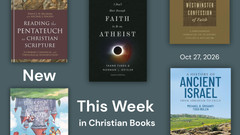
New Christian books tend to release on Tuesdays. Here are just a few of the books that have become available today. (For a more thorough list, visit This Week in Christian Books.)
The Westminster Confession of Faith, edited by J.V. Fesko. “This essential collection of essays presents an accessible guide to the Westminster Confession of Faith for 21st-century readers.” It includes contributions from Kevin DeYoung, Sinclair Ferguson, Chad Van Dixhoorn, and others.
I Don’t Have Enough Faith to Be an Atheist by Frank Turek & Norman Geisler. This is an updated edition of a popular apologetics book in which the authors argue “that Christianity is not only more reasonable than all other belief systems but is indeed more rational than unbelief itself.”
A History of Ancient Israel by Michael Alan Grisanti & Todd Bolen. This book tells the history of ancient Israel from Abraham to exile “with the biblical record enriched by the latest historical research, archaeological discoveries, and geographical insights.”
Flashback
Thy Will Be Endured. “God, teach me how to serve you in sickness even better than I did in health. God, show me how to honor you in grief with even greater faithfulness than in joy. God, lead me to greater fruitfulness in lack than in abundance.”


People are seeking this or that quality in their wives. I say, “Give me a praying wife.”
—Thomas Charles