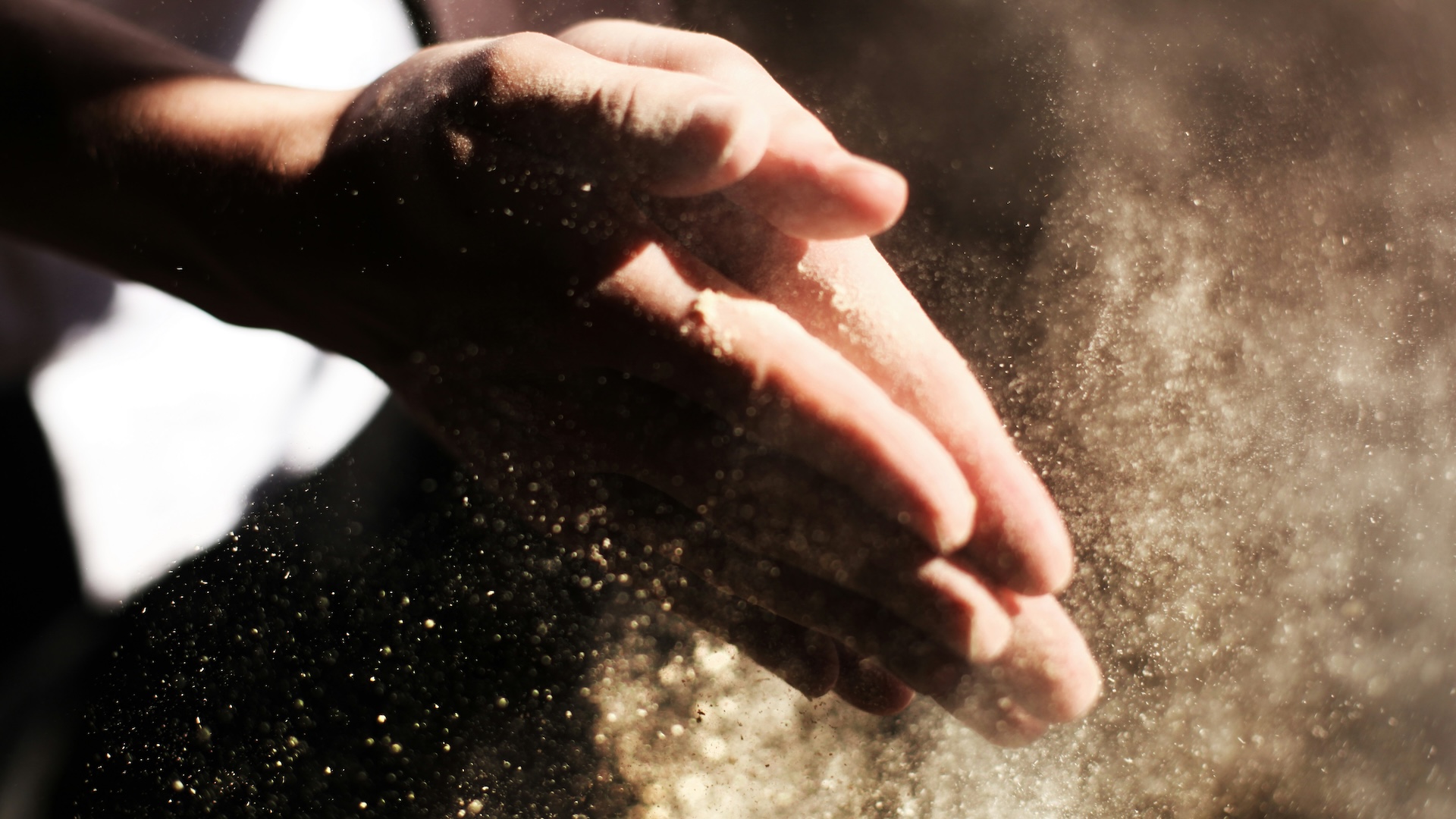
One of the things I enjoy about having been an avid reader over a long stretch of time is seeing how authors grow and change as the years go by. I have seen many authors begin writing when they had small children, then when they had bigger children, adult children, and eventually grandchildren. Some of them are now even contemplating the complications of old age and the inevitability of death. In fact, this is the theme of Jen Wilkin’s new book Dust to Dust.
Of course, Wilkin isn’t all that old—just in her mid-50s. But the ideal time to contemplate old age is not when it has already arrived, but when it is on the not-too-distant horizon. It is wise to face aging proactively rather than merely reactively, and to begin to prepare for it well in advance. Thus, “This is a book about this life and the unexpected path to living it to the full. We find that path through a right assessment of the aging process, one that is distinctly Christian in its perspective. I believe that how we think about aging, and, relatedly, the aged themselves, can alter the course of our lives either for the better or for the worse. More than that, I believe embracing and living from a Christian view of aging is one of the simplest ways believers can shine like stars in our current generation.”
Our current culture has an unhealthy relationship with aging, and she addresses it head-on. “The world around us is eager to supply us with false stories from which to live, stories that follow the path of worldly wisdom instead of godly wisdom. It … wants us to think about aging in a way that is false, in a way that does not align with the way the Bible speaks of it. I propose that the way we think about aging and the aged has been overtaken and subsumed by a false story, and a potent one at that. It’s a false story that yields negative consequences for all who embrace it, a false story rooted in how we understand what we were made for and how we relate to time itself.”
Those who are familiar with Wilkin’s writing and teaching ministry may know that she loves the common biblical literary device of the chiasm, and it seems appropriate, then, that the book she writes to counter this false story through biblical truth is chiastic in its structure. It goes like this:
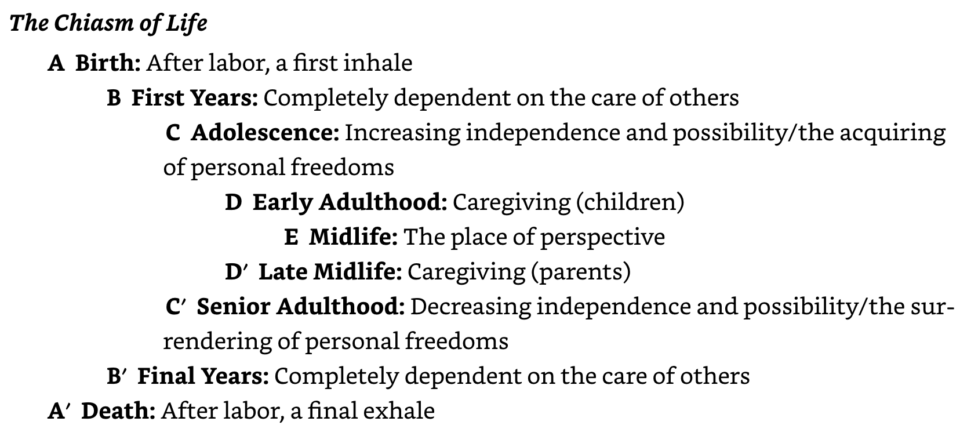
That chiasm forms the structure of the book, which, as an author, I find both clever and satisfying. For this reason, the first chapter in the heart of the book covers both birth and death through the lens of gaining breath and losing it again. She writes about the first and final years of life by considering the gaining and losing of strength. She writes about adolescence and senior adulthood when she pairs gaining and losing of ability and possibility, then about early adulthood and late midlife when she couples caring downward and caring upward. She offers midlife as the place of perspective when there are equal views back to the beginning of life and forward to its end. It’s a creative structure that works remarkably well.
The book is full of wisdom, some of it drawn straight from Scripture and some of it from the author’s own experience. Among its many strengths is that Wilkin’s understanding of human aging is not merely grounded in the self or the family, but also in the local church. The responsibility to age well and the related responsibility to care for those who are aging is deeply invested in the church. Dust to Dust also counters competing narratives being spread through social media and being amplified through practices like euthanasia. It insists there can be dignity in aging and a crucial place in the world for the aged.
“My hope for this book,” she says, “is to meditate on the preciousness of all of life to develop the triple wisdom of self-awareness, submission to God, and service to others. I want to shine luminously in a crooked generation, and I want that for you too. I want us to be good at aging, and I want us to be good at caring for the aged with the dignity they deserve, to the glory of God. I want these things because I believe the Bible wants these things for us.” I believe she accomplishes those goals well, making this a book that will bless anyone who reads it.