I don’t think any author played a bigger role in my childhood than Laura Ingalls Wilder. The “Little House” books were among the first my mother ever read to me. Then, as soon as I learned to read on my own, I began devouring them, eventually reading them so many times I lost track. My family even took a long vacation through the Western U.S. so we could visit many of the sites we had read about in her books. In her own way, Laura Ingalls Wilder had an incalculable impact on my childhood.
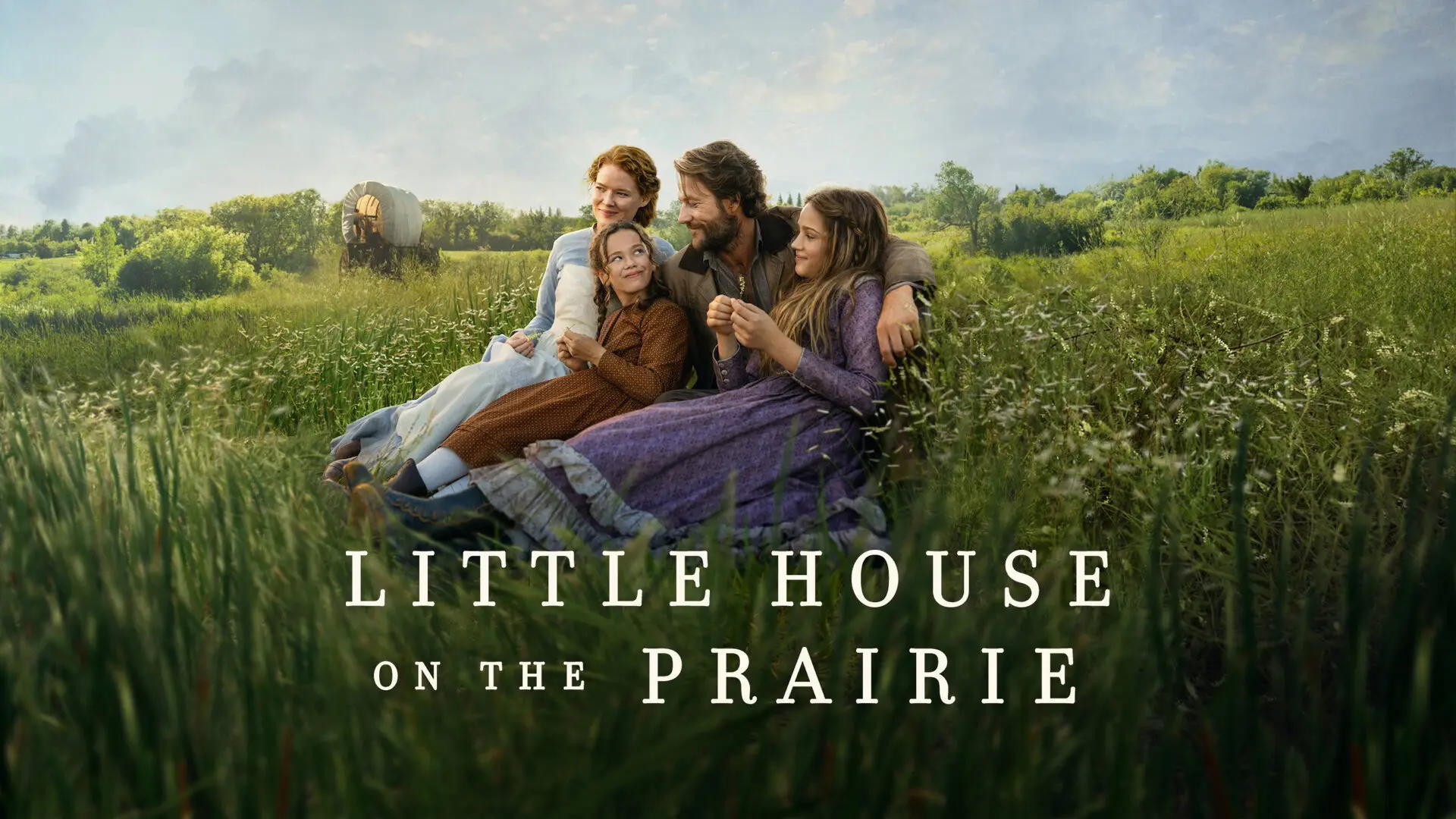
When Netflix announced they would debut a Little House on the Prairie series, I received the news with a sense of dread. While I knew it could be like All Creatures Great and Small and remain relatively faithful to the spirit of much-loved books, it could also be like Rings of Power and be anything but. This is, after all, an era when Hollywood seems intent on tearing down our heroes rather than affirming them, or reframing them according to modern mores rather than presenting them in the ways their authors intended.
I recently settled in to watch the series with Aileen, who probably read the books even more than I did when she was a child. We were pleasantly surprised by them, though she enjoyed them a bit less than I did. I didn’t love everything, but I felt that, on the whole, the series was relatively faithful to the spirit of the books. I know that adapting a book to become a television series requires making some changes, and that adapting a children’s story to make it appeal to adults requires even more. Hence, it was never realistic to hope that the series would simply be the books brought to the screen, as much as that might have been my preference.
Here are a few of my takeaways, divided into positives, neutrals, and negatives.
Positives
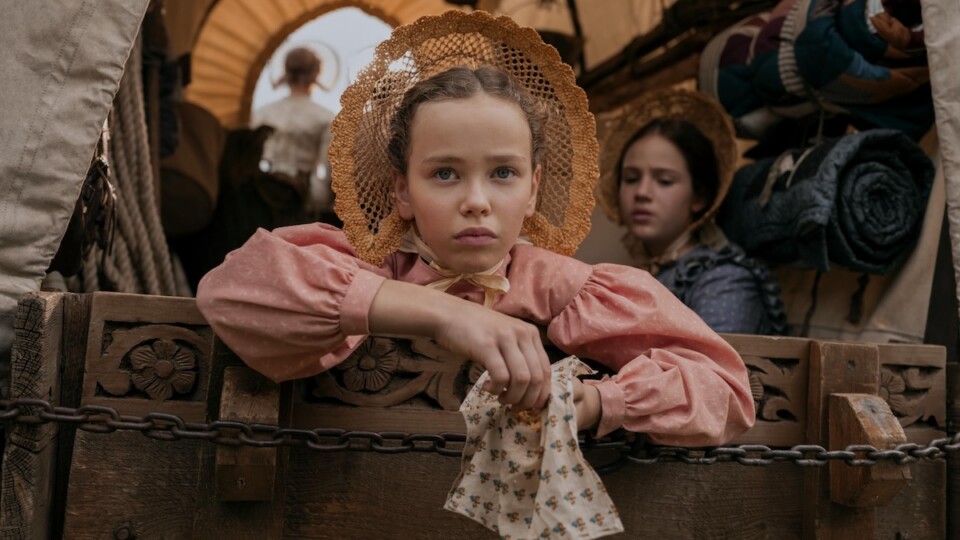
The casting is excellent and the most prominent characters suit their roles well. Alice Halsey as Laura and Skywalker Hughes as Mary are both talented actresses who are far more believable than most children their age. Warren Christie makes a good Mr. Edwards, and Meegwun Fairbrother is compelling as William Mitchell, an Osage farmer who is torn between two ways of life. The series gives flaws to the kind of characters who in modern media are often presented as flawless and gives virtues to characters who in modern media are often presented as having none.
Pa provides a positive example of masculinity and fatherhood, qualities that are so often presented negatively today. While he doesn’t quite attain the near-mythical status Laura gives him in the books, he clearly loves his family, leads them, and cares for them well. The series also provides positive examples of family life and community care.
On the whole, the plot is true to Little House on the Prairie with occasional backstory references to Little House in the Big Woods and a few details that were true of Wilder’s life but omitted from her books. The world the characters inhabit is quite well developed and realistic. The landscapes are beautiful and the sets are realistic in portraying the pioneer experience. Netflix clearly did not skimp on budget.
The series is clean and appropriate for family viewing, as it ought to be. There are a couple of veiled references to sexuality (e.g., Pa telling Ma that he will soon build a real house and, with a twinkle in his eye, saying that it will have a real bedroom; a couple who is cohabiting) but nothing that children will pick up on or that will be of particular concern to their parents. There are no anachronistic gay or trans characters ramrodded onto the frontier just to satisfy modern sensibilities.
The family is clearly Christian, and on several occasions they sweetly sing hymns together. There is nothing negative or deconstructionist about their faith.
The series aptly captures the developing tensions between the settlers and the Osage. It tells how the Native Americans were often mistreated, but maintains roughly the tone Wilder does in her books instead of reinterpreting it through twenty-first century eyes. It neither whitewashes the actions of the settlers, nor lectures the viewer.
There are many positives, and much to appreciate. There are also a few decisions I found neither positive nor negative.
Neither Positive nor Negative
The show adds several characters who are either not in the books or receive only passing mentions there. For example, the books briefly describe a black doctor, Dr. Tann, who helped the family when they were ill, but the series makes him a central character. Jemma James, who is absent from the books, is a wealthy but annoying leader in town who figures prominently throughout the series. A boy who has been abandoned by his parents and adopted by a shopkeeper receives a fair bit of screen time as well. The attention given to these characters leaves less time to develop the real ones, like Reverend Alden, or the more important ones.
There are no anachronistic gay or trans characters ramrodded onto the frontier just to satisfy modern sensibilities.
The series integrates Native Americans into the growing community to a greater degree than the books do, to the point that Laura’s best friend is Osage. This makes the family’s experience more diverse than would have been the case, but is in keeping with Laura’s fascination with Native Americans and the family’s concern for those who were otherwise despised or overlooked. I didn’t mind this decision, even though it diverged from the source material.
Laura sometimes behaves in a way that is a bit more twenty-first century than nineteenth century. Aileen expressed it like this: “In the books, Laura would behave badly, but she always knew it was wrong. In this series, she behaves badly, but thinks it’s okay.” In other words, there is a bit of a modern outlook on life transposed into that era. Thankfully, it’s not so prominent that it becomes hard to take.
Negatives
On the negative side, most of the fabricated characters are not particularly compelling, yet receive a great deal of attention, sometimes even becoming the focus of entire episodes. Also, there are several silly romantic plot lines, including one that involves Mary. These don’t contribute anything of substance, and surely nobody wants to see two 14-year-olds share a kiss, however innocent.
Also, the series gives many of the adult characters a dark backstory that explains why they have left the developed parts of the U.S. for the frontier. This may be realistic, especially since so many adults of that era had been in some way scarred or traumatized by the Civil War, but it clashes with the tone of the books. It makes the series darker than the story Wilder chose to tell. Then again, I now interpret her story through adult eyes and can’t help but see that there was more darkness than I ever noticed as a child. Still, there is a heaviness to the series that isn’t quite in keeping with Wilder’s stories.
I would also say that even after a whole season, I don’t really care about the characters very much. I think that may come back to what I said before: that too much time was spent developing minor characters and too little time given to developing the main ones. Wilder was so adept at portraying the wonders of life’s simplest pleasures and the ways they bound the family together. The show attempts to capture some of that, but with much less success than the books.
I’ll close with one more positive: This first season wraps up perfectly and in a way that is consistent with the book. There is also a fun little moment of foreshadowing the next season and the pending appearance of Laura’s primary antagonist.
Overall
Overall, I feel a bit more positive about the show than Aileen does, though she won’t object to watching the next season with me when it releases next year. That said, if this series were not based upon such familiar and beloved stories, we would probably not be as interested in pressing on.
Few shows on television today are pleasant. Some are brooding and deconstructionist, many are evil and perverse. Little House on the Prairie may be an imperfect adaptation of its much-loved source material, but it’s a pretty good one. It’s easy enough to point out the ways it could have been better, but it’s far easier to think of all the ways it could have been far worse. If we still had children in the home, we’d gladly watch it with them. Since we don’t, we’ll watch it ourselves and try to appreciate it on its own terms rather than the ones we might prefer.