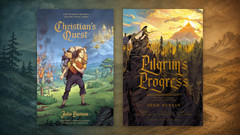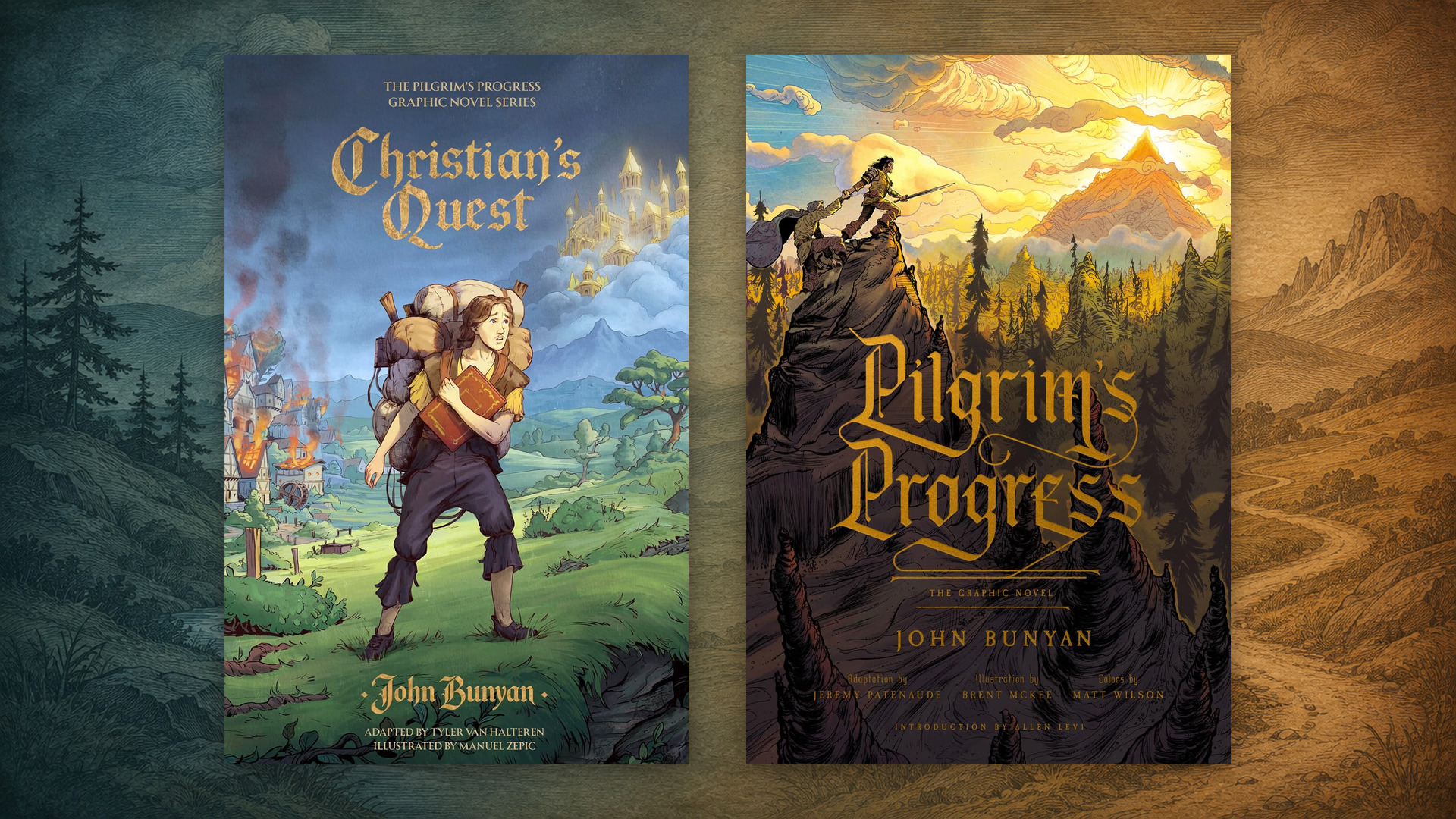
I have often expressed how spoiled Christian readers are today. As if we needed more proof of this, how about the fact that in a single month, publishers released not one but two major graphic novel adaptations of Pilgrim’s Progress? Both are well-written, beautifully illustrated, and faithful to Bunyan’s story. Let me help you understand their similarities and differences and tell you which one might be best to add to your library.
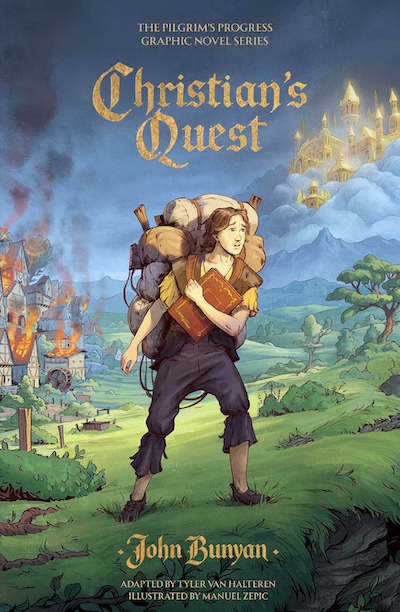
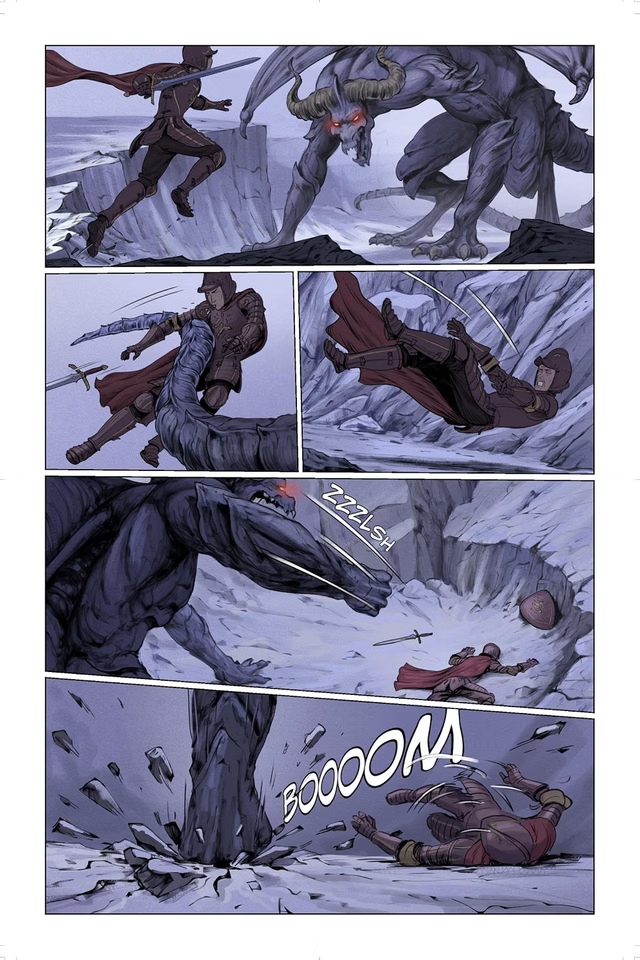
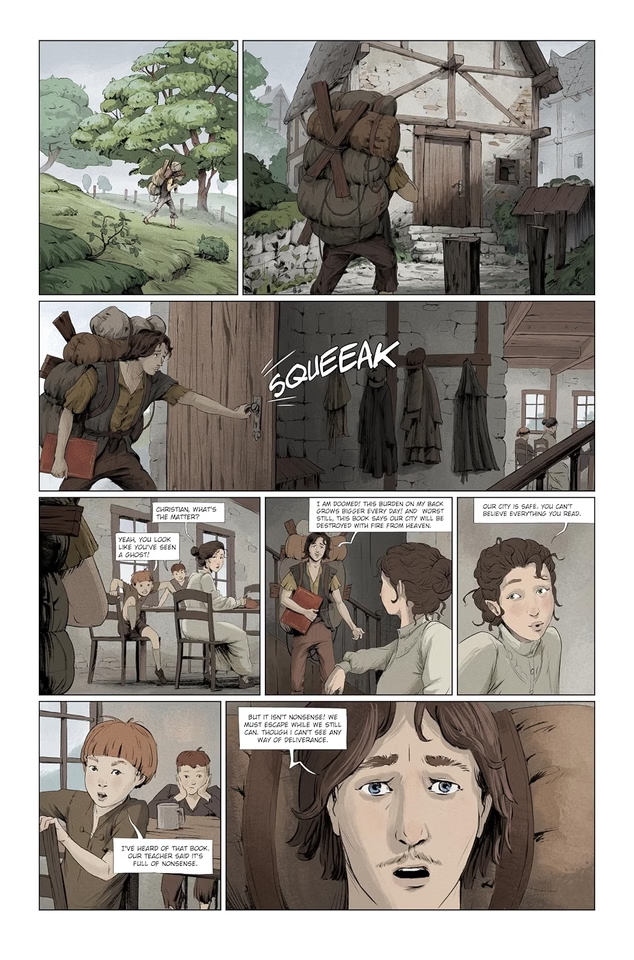
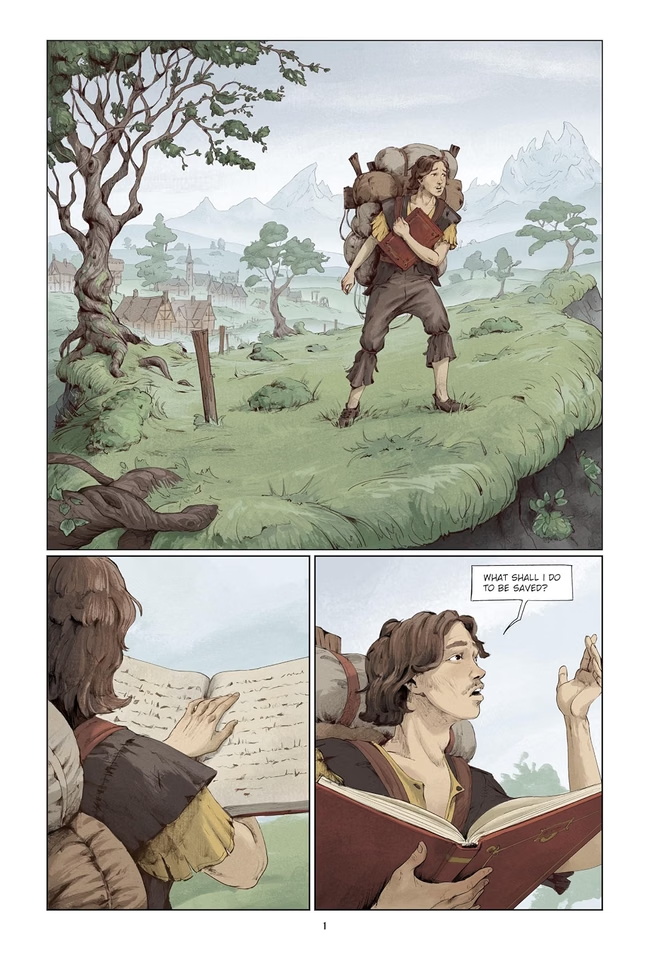
Christian’s Quest is written by Tyler Van Halteren and illustrated by Manuel Zepic. It is published by Lithos Kids, which has already released the three-part Little Pilgrim’s Big Journey, an illustrated adaptation of Pilgrim’s Progress for young readers, and The Mansoul Chronicles, which is based on Bunyan’s Holy War. It is a 220-page 7×10.63 inch hardcover that targets children aged 8+, though it is meant to be enjoyed by teens and adults as well. Its illustrations are what I might describe as a clean, polished YA style. The lines are thin and tidy and much of the form comes from shading. The colors tend to maintain a soft, muted, painted look. It lightly updates some antiquated language so that Bunyan’s Slough of Despond becomes the Bog of Despond. Christian is youthful and fresh-faced, and his burden is a bulging pack on a frame. It includes some bonus material: a behind-the-scenes look at how a graphic novel is made, and a study guide that explains and applies each of the stages of Christian’s quest. It also indicates that a sequel, Christiana’s Crown, will be released in 2028.
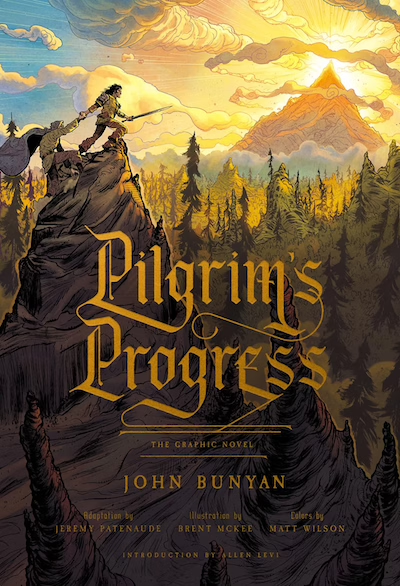
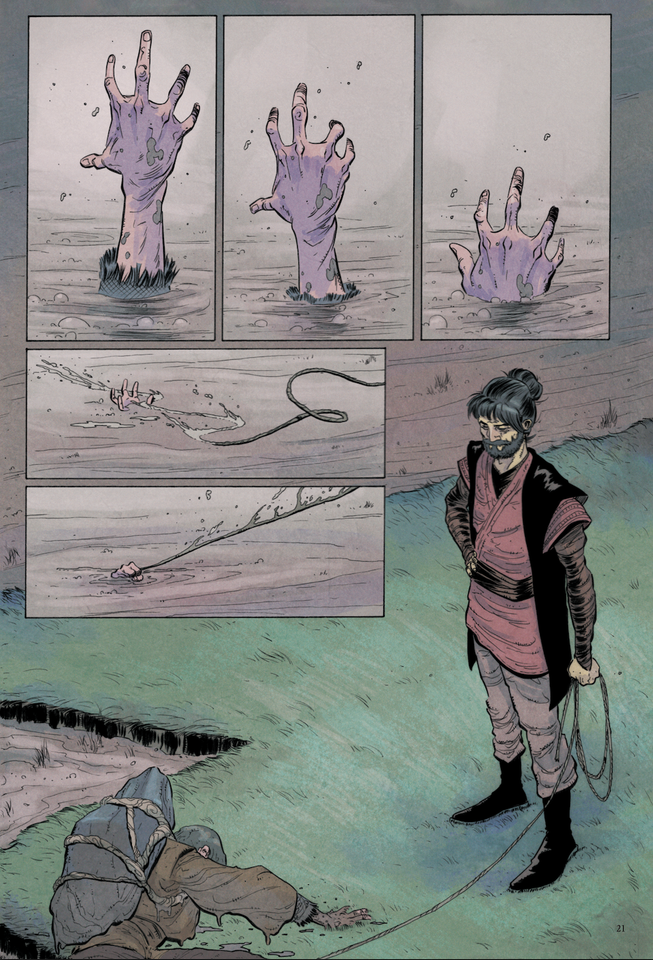
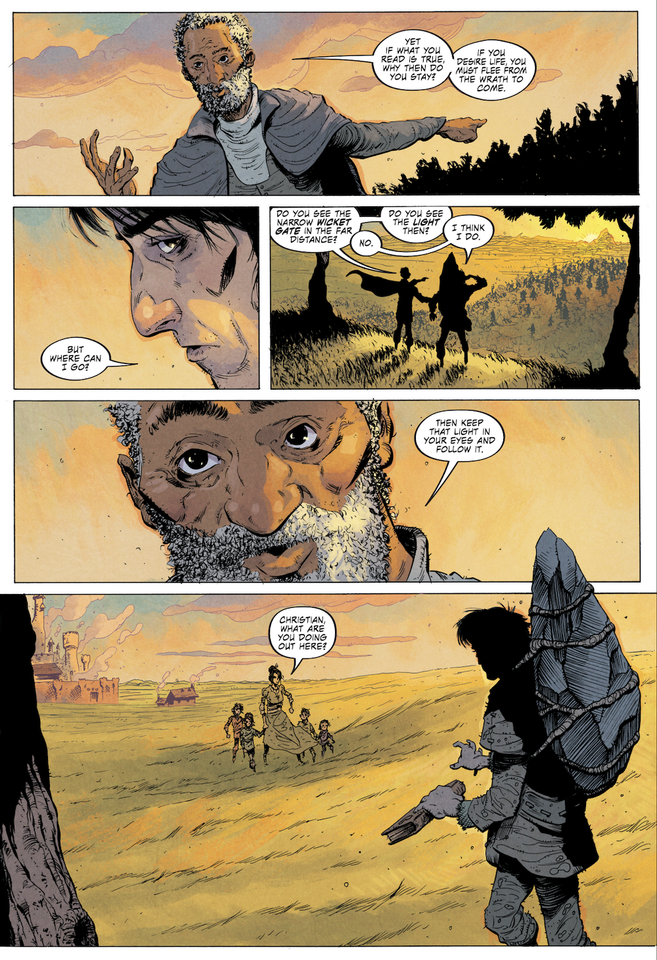
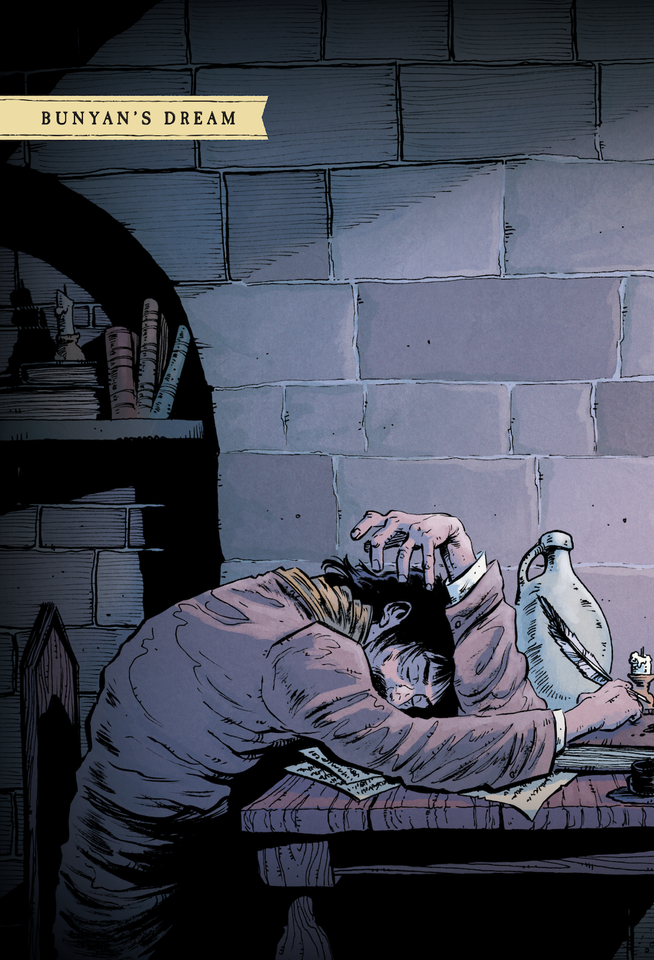
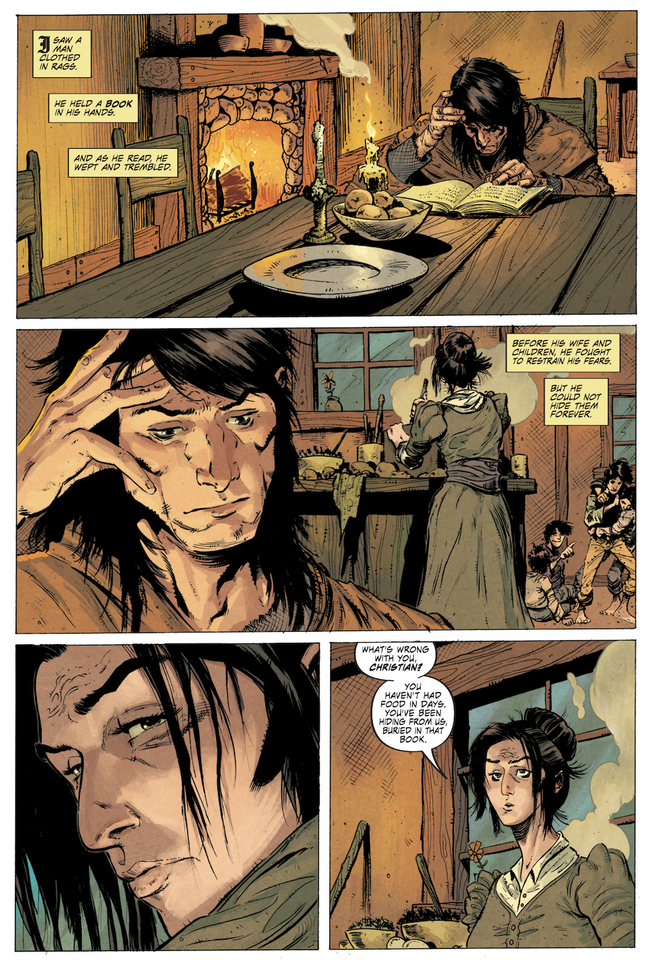
Pilgrim’s Progress: The Graphic Novel is written by Jeremy Patenaude, illustrated by Brent McKee, colored by Matt Wilson, and lettered by Taylor Esposito. It is published by Crossway as what I believe is the company’s first graphic novel, though it has a long history of publishing books for young readers. It is a 256-page 7×10.25 inch paperback that targets readers aged 14+. Its illustrations are what I might describe as gritty and stylized and perhaps a bit more indie than mainstream. It uses heavy brush ink, dark shadows, and vivid colors. It does not update Bunyan’s antiquated language. Christian is a gaunt, tormented, weathered adult whose burden is a huge stone roped to his back. Its bonus material includes a lexicon of the key characters and locations and reflections on each of the chapters. There is no indication of a sequel that will cover Christiana’s quest.
While these two graphic novels tell the same story and tell it faithfully using dialogue and illustration rather than narration, they tell it using different visual language largely because Christian’s Quest is meant to be accessible to a younger demographic. You might say that Christian’s Quest is a bit more kid-friendly and Pilgrim’s Progress is a bit more adult-friendly, though both could easily be enjoyed by kids and adults alike. After all, who doesn’t enjoy reading the occasional graphic novel? Another key difference is that Pilgrim’s Progress is a paperback where Christian’s Quest is being sold as more of an heirloom object that features cloth binding, gold foil, and a ribbon marker.
Let me show you a few examples of the art from each book.
Christian’s Quest
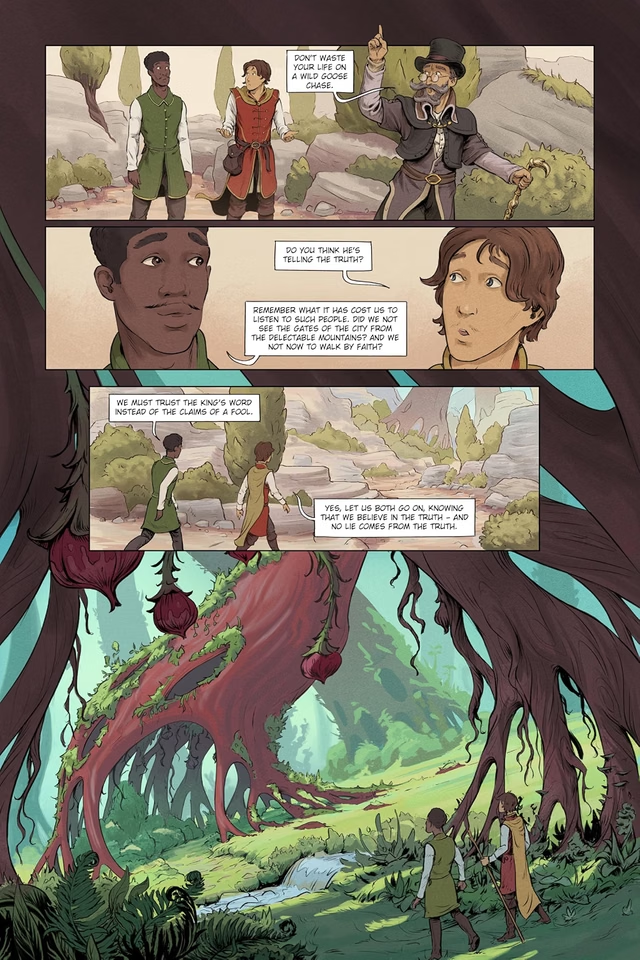
Pilgrim’s Progress
My Recommendation
Which do I recommend? Either! Both! If your readers are younger, Christian’s Quest is the more obvious choice, and if they are older—teenagers and up—they may prefer Pilgrim’s Progress. But you couldn’t go wrong with either, and you couldn’t go wrong with picking up both.
Where to Buy
Christian’s Quest
Lithos Kids · clothbound hardcover · ages 8+
Pilgrim’s Progress: The Graphic Novel
Crossway · paperback · ages 14+