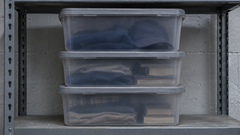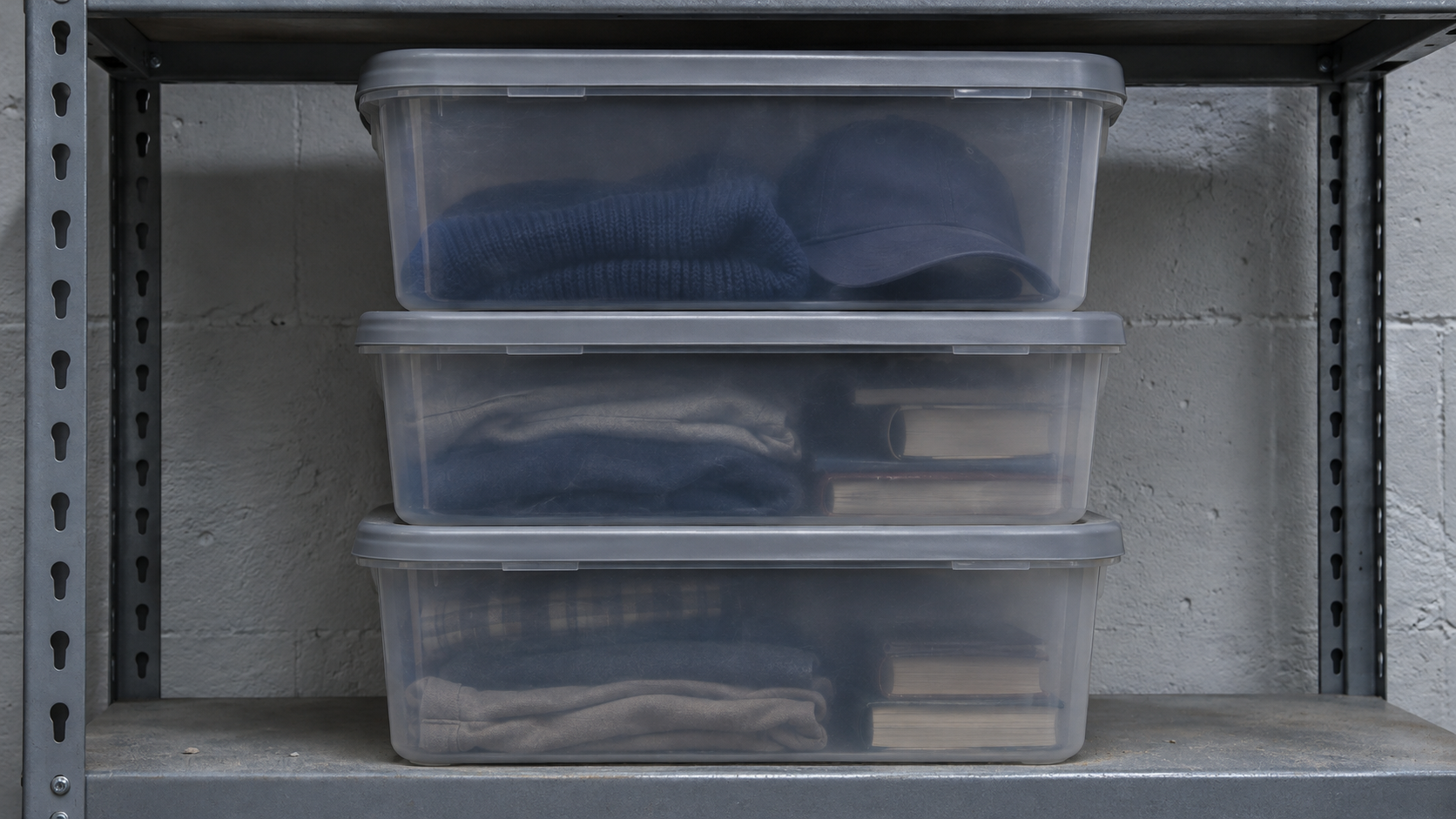
Those who live in a cold-weather climate will be familiar with the twice-yearly ritual of swapping summer clothes for winter and winter clothes for summer. Sometime around November, we pull the clear Rubbermaid bins from their shelves in the basement, then unpack the toques,1 gloves, fleece-lined boots, and heavy coats before repacking them with the out-of-season raincoats, baseball caps, running shoes, and sandals. We reverse the ritual in April or May—whenever we have finally enjoyed the kind of consistent warmth that heralds the arrival of spring and the coming of summer.
It took some time after our son Nick’s death before we could clean out his room and begin to either dispose of his possessions or give them away. There were many we could not bring ourselves to purge, so we packed them into that same style of bin and stacked them on those same shelves. Now, twice a year I find myself catching glimpses of the bits and pieces of his life. To anyone else, these bins might seem to contain a random collection of clothes, gadgets, and paraphernalia, yet we associate every one of them with him. There’s a piggy bank shaped like a safe whose bell would ring whenever the girls playfully attempted to pillage it. There’s a selection of books that he read and reread: Tintin, Calvin & Hobbes, and a few volumes considerably more serious. There’s a sweater that looked especially handsome on him and, of course, his ever-present Blue Jays hat. There’s nothing of any real value, yet it’s invaluable to us. It’s a life reduced to three 14-gallon bins.
I expect those bins will still be stacked on the shelves when Aileen and I die or need to move out of our home. I expect they will have all the same objects in them. We have learned that what is not purged immediately is likely to be kept indefinitely, for our attachment has only grown through the years. To throw them out or to give them away seems more disloyal today than it would have been six years ago. In fact, we can barely even allow ourselves to open those bins or to touch their contents. It’s just too painful to come into contact with all these things that remind us of a person who was once so much a part of our lives.
Nick still is a part of our lives, I suppose, but in a different way. He’s no longer the son who delights us with his wit and impresses us with his brilliance. He’s no longer the son who checks in with Aileen when I’m traveling far from home or who is on call when I have questions about Greek or Hebrew. He’s the empty chair during the holidays, the ache when I think of happier times, the tear that springs to my eyes when we stand in church to sing of the future. He’s the lump in my throat when I consider Christ’s return and the joy that thrills my heart when I ponder heaven. He’s present still, but in a way that is as different as day is from night and pleasure is from pain.
I’m thankful that we kept these items, these traces of his existence and reminders of what he used, wore, and enjoyed. I’m thankful that in their own way they remind me of him and all the joy he brought to our lives. I’m grateful that they cause me to long for the day when we leave them all behind, probably still in those Rubbermaid bins, and depart this world as Nick did—with nothing but the faith God has given us and the assurance that he will receive us. In that way, these valueless objects are immeasurably precious.
- Pronounced tewk (rhymes with duke), this is a uniquely Canadian word for a winter hat (or what some refer to as a beanie). ↩︎