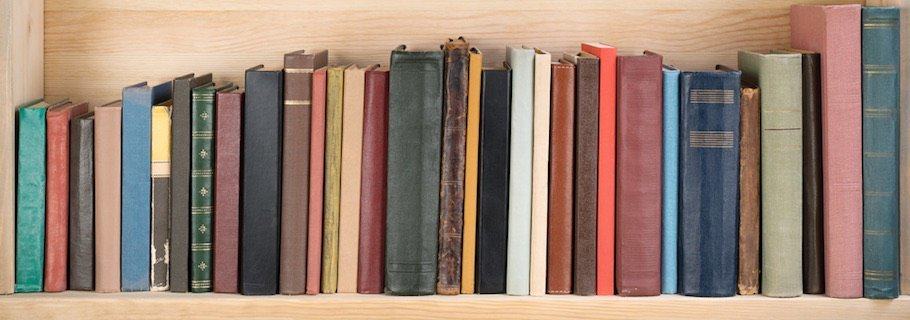
I read a lot of books. I read a lot of books because I just plain love to read, and I read a lot of books because, as a reviewer, I receive a lot of them and am always trying to keep ahead of the growing piles. But the more I read, the harder I can find it to answer this question: What is a good book? What are the marks of an especially good book?
I was recently reading Iain Murray’s short biography of Amy Carmichael and in there he quotes A.W. Tozer who once said, “The work of a good book is to incite the reader to moral action, to turn his eyes toward God and to urge him forward.” And yes, this a good criteria; a good book will urge its reader to do something, to become something, to make some significant and lasting change to life. Murray goes on to say, “Amy Carmichael’s writings belong to that category. Numbers who took her books up only out of interest, put them down to pray.” Prayer: That may be the best moral action of all because it ought to come before anything else we do, any other changes we make, any other plans we form.
So I paused and began to think of the books that have caused me to stop and to pray, to put down the book and to go straight to the Lord. And here are just a few of them:
- The Cross He Bore by Frederick Leahy. Few books have impacted me as deeply as this one, with its slow, beautiful meditations on the suffering and death of Jesus Christ. When I reviewed it ten years ago I wrote, “I was often compelled to stop and worship, to stop and meditate, or to stop and dry my eyes, thanking Christ for His immeasurable sacrifice.”
- The Holiness of God by R.C. Sproul. The Holiness of God is remarkably effective in two ways: In exposing the sinfulness of the reader, and in exposing the holiness of the Creator. As I came to a deeper understanding of my own depravity, I couldn’t help but to come to a deeper appreciation of God’s holiness. I had to stop and pray often, calling upon God for his forgiveness and thanking God for his mercy.
- A Praying Life by Paul Miller. I have learned not to take it for granted that a book on prayer will actually help me pray. Certainly, though, the best ones do, and Paul Miller’s A Praying Life is one of them. It gave me a hunger for prayer; I looked forward to getting to the end of a chapter so I could immediately start applying it.
- John and Betty Stam by Vance Christie. It is not only theological works, or Christian living works, that can drive us to pray, but also biographies. One biography that caused me to put it down to pray was Vance Christie’s work on John and Betty Stam. The Stams were such normal, relatable people who had such great love for the lost, that when they faced the ultimate cost of their faith, I just had to ask God to give me that confidence and that fervor.
- Look and Live by Matt Papa. There is something beautifully poetic about this book. Papa teaches no new truths, but finds new and fresh ways of explaining those same old truths we love so much. Several times I was captivated by the beauty of the good news, and could only pause to pray.
- Overcoming Sin and Temptation by John Owen. Of all the books I have ever read, besides the Bible, I don’t think any has done such a work in my soul as Owen’s Overcoming Sin and Temptation. I have read it repeatedly, and every time it has forced me to pray, to confess sin, and to seek God’s grace as I attempt to grow in holiness.
I’m sure there are others besides these 6, but they give just a sampling of books that meet that precious criteria: “Numbers who took her books up only out of interest, put them down to pray.”
What are some of the books that fall into this category for you? What are books that have forced you to stop and to pray?
Image credit: Shutterstock