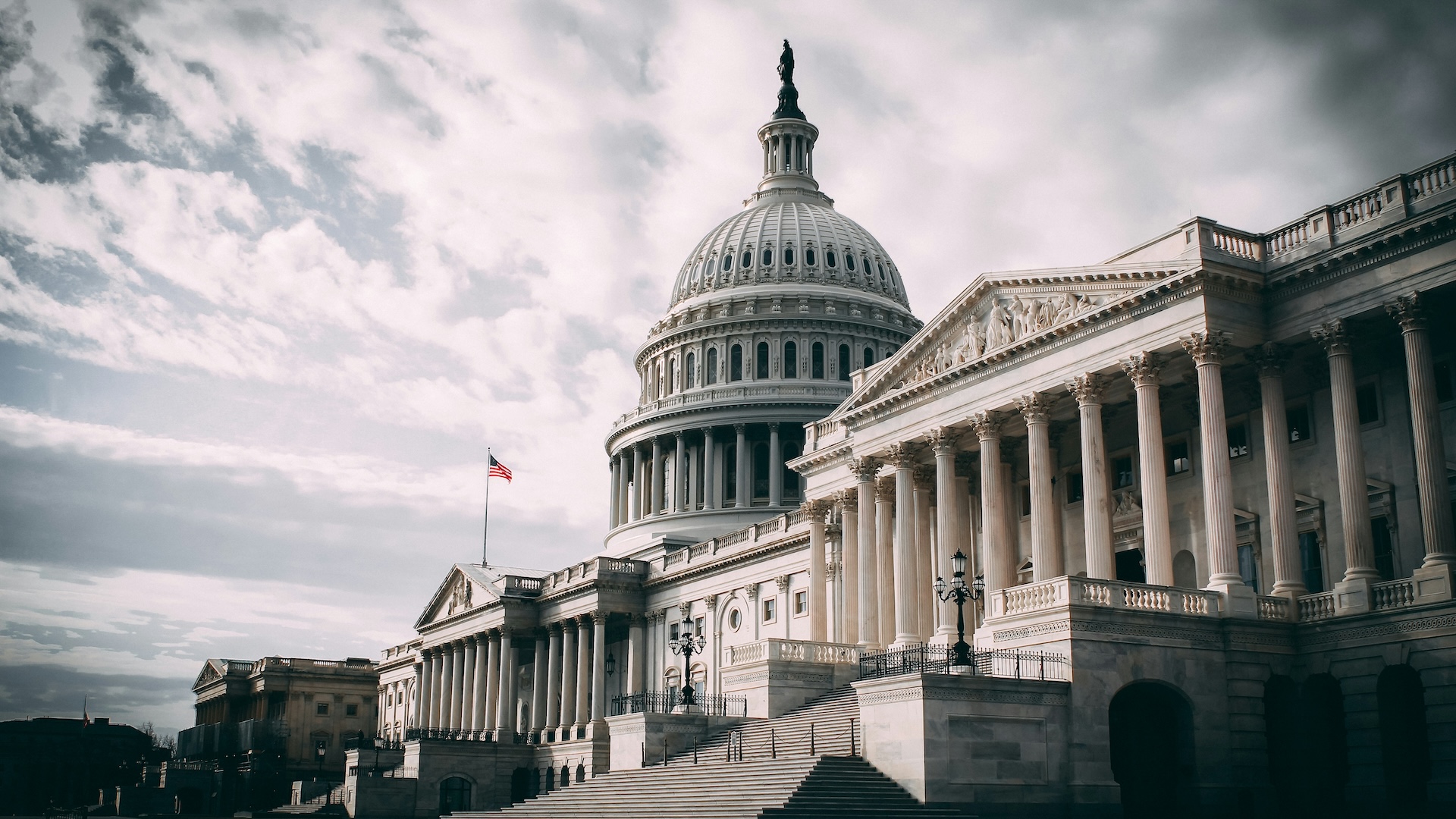
I love a good biography. It’s always fascinating and often inspiring to read the account of a life of special significance. Yet for all the biographies I’ve read, A Light on the Hill may be the first whose subject was not a person but a church. It surprised me what a blessing it was to read about that church and to see how God has seen fit to bless, preserve, and use it for so many years.
In late 1867, Celestia Anne Ferris, a young member of E Street Baptist Church in Washington, called her friends together to pray for the establishment of a church on Capitol Hill. Only a few people were present that evening and their specific prayers were not recorded, but it did not take long for God to begin to answer them. By 1871, they began a Sunday school in a rented building and by 1874 they were ready to purchase property and associate together as the Metropolitan Baptist Association. On February 6, 1876, nine years after their first prayer meeting, they dedicated a new chapel to the Lord—a chapel called Metropolitan Baptist Church. Though the building was later demolished in order to make way for a larger one and though its name has changed a couple of times, the church has remained ever since. Today it is known as Capitol Hill Baptist Church.
In early 2020, CHBC, along with almost every other church in the world, was forced to contend with the opening days of the COVID-19 pandemic. At that time Caleb Morell was working as Pastor Mark Dever’s personal assistant. Dever tasked him with finding out how the church had responded to the Spanish flu epidemic a century prior. Morell began to rummage “through the dusty pages of minutes, stored in filing cabinets in a basement closet underneath the baptistry.” As he did so, he “began to reconstruct the events of 1918 that led the church to cancel services for three weeks in response to the onset of the Spanish flu.” A few days later, he published the story at 9Marks.org and gained an overwhelming response that extended to the mainstream media. “I began to experience the firsthand impact narrative history can have on current events: to draw needed light from the past to put present challenges in perspective. For the next months, I spent any spare time poring over newspaper clippings and members’ meeting minutes.”
This study led to a class on CHBC’s history and, eventually, to this book. And what a book it is. While the great majority of the people who attended CHBC over the years were as ordinary as you and me, it has been home to a few outsized personalities. Through them and its strategic location, it has been able to have a significant impact on evangelicalism within the United States and beyond. In his foreword, Mark Dever highlights a few of the noteworthy people: “Joseph Parker, the abolitionist pastor who argued with Lincoln in person; Agnes Shankle, the faithful member who stood up to the pulpit search committee and perhaps, thereby, saved the congregation from liberal compromise; K. Owen White, the reforming expositor who later gained fame for a question he asked Senator John F. Kennedy when he ran for president. So packed with characters is this story that not all of these tasty details could be included. But there are so many more stories and so many interesting characters.”
There is the first African-American member who persevered through many challenges because she loved the Lord, loved the church, and loved its worship. There are the reforming pastors who pulled the church back from the brink of compromise. There is Carl F.H. Henry who was the founding editor of Christianity Today. There is the fallen leader who risked destroying the church even as he destroyed his own ministry, and tied closely to him, the godly man whose wife was victimized but who endured and forgave for a higher cause. There are those and so many others.
As he comes to the end of the book, Morell considers how the church remained centered on the gospel and rooted in its local community for 150 years. He offers a three-part answer: Pastors who preached the gospel, members who lived lives of quiet faithfulness, and a congregation that prayed. “Through the faithful preaching of the word, the selfless labors of godly members, and the prayers of God’s people, God has preserved a brightly shining beacon for the gospel on Capitol Hill.” May he continue to do so for another 150 years and far beyond.





