Has anyone ever lived in times that were normal? Probably not, I suppose. Every time and every context has its peculiarities, I’m sure. Regardless, there’s no doubt that we are currently living in unusual times—in what seems like a transitionary phase during which old traditions, old morals, and old ways of understanding the world are giving way to new. There are new questions, new concerns, and new challenges to those who want to live well in a world like this one.
Where do we go to learn to live well in new times? There is no better place to turn than to old wisdom—to the very same book that guided our forebears as they lived through the challenges that defined their own eras. The Word of God is, after all, living, active, and powerful, able to teach and to guide us no matter our times and no matter our circumstances.
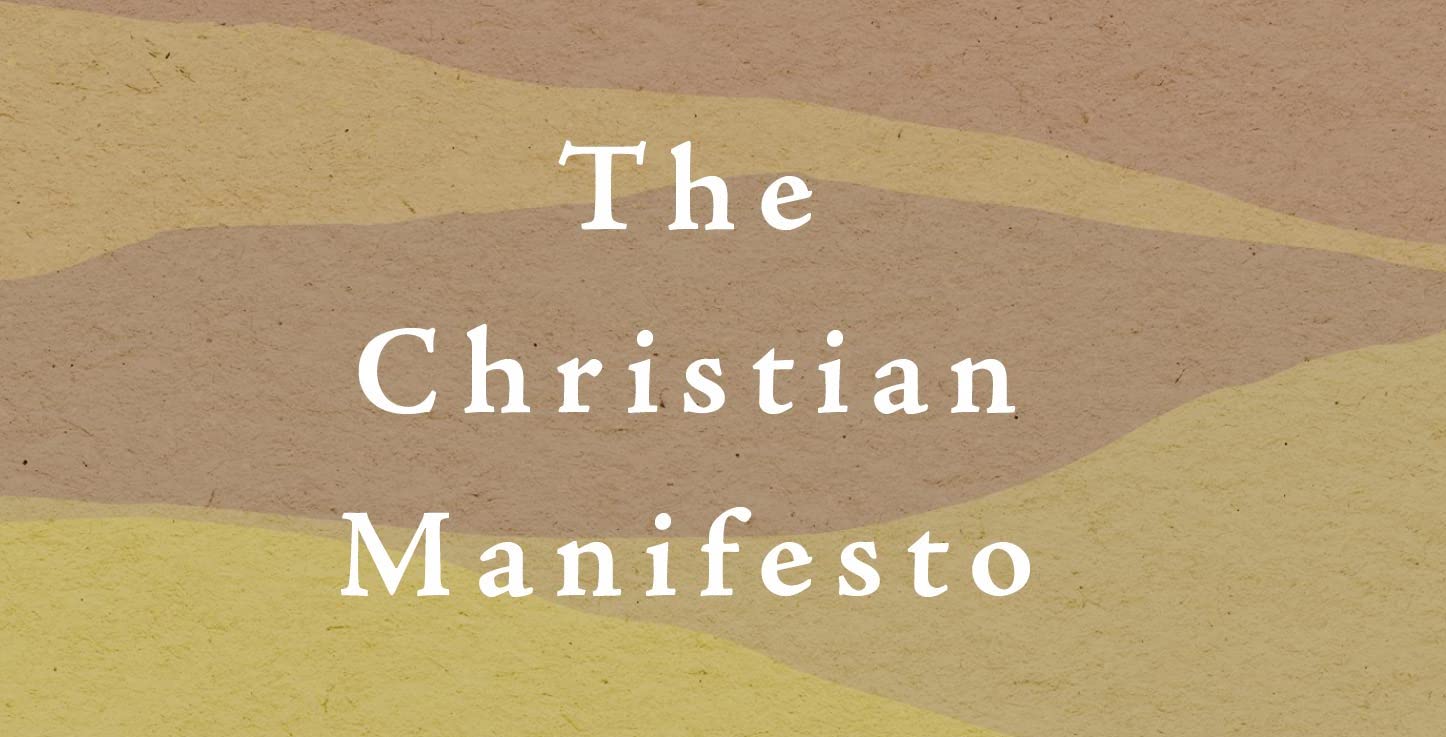
In The Christian Manifesto, Alistair Begg takes an extended look at Jesus’ Sermon on the Plain (which, though it bears certain similarities, should not be confused with his longer Sermon on the Mount). “This sermon,” he says, is “Jesus’ invitation to you to experience life at its very best. It is his description of what life in his kingdom—a kingdom where all that is wrong is being put right—looks like as we live in this world.”
In this book, we’re going to look at what can be helpfully seen as a “Christian manifesto.” A manifesto is a public declaration or proclamation issued by a monarch or head of state, or by a representative of a company or organization. Here is a manifesto for the Christian life, straight from the lips of Jesus… It is a manifesto that is not oriented towards the political arena, but towards the relational and individual one.
That’s not to say this sermon (and therefore this book) has nothing to say about how we live and relate to others in the political arena, but that this is not its primary purpose. Rather, it is a manifesto that calls us to live significant, meaningful, and distinctly Christian lives in our everyday affairs and our very normal interactions with others.
An especially important word in this manifesto is “blessed,” one we all recognize from the Sermon on the Mount. In this context “blessed” means “How happy!” “How fortunate!” or “How privileged!” Being a follower of Jesus Christ unlocks a happy, fortunate, privileged life and this Manifesto is aimed at helping us achieve it—to live the kind of blessed life Jesus offers.
The Christian Manifesto is simply an extended exposition of the Sermon on the Plain, and one written by an especially skillful and proven expositor. Though the book may have had its genesis in a series of sermons, it has been well adapted for the new medium. Begg shows how Jesus calls us to so reverse the values we hold dear that they became practically upside down to what they were before. He calls us to an exceptional kind of love—a love that would be impossible if it was not first modeled by Jesus Christ. He helps us understand how to live by the Golden Rule and how to freely and genuinely grant forgiveness, even when it is costly and even when it seems impossible. Along the way he writes with passion and conviction, often pausing to help the reader do some appropriate application. He is vulnerable about his own life, his own struggles, and his own tendencies to fail to do what Christ commands. It makes for a powerful product.
“We are not called to be like the world,” he insists, “and the world does not need us to be like the world.”
We have something better to say because we have someone better to follow. That means the call of Christ to you and me is both greatly exciting and deeply challenging. The call is not to be comfortable but to be Christ-like—to discover the surprising means of experiencing real blessing, and in doing so to point others the way to it too.
This book, and the great sermon that lies behind it, provide a powerful manifesto for living well, living courageously, and living in a way that honors God in uncertain times. I would encourage you to read the sermon, to read the book, and to apply them both deliberately and prayerfully.