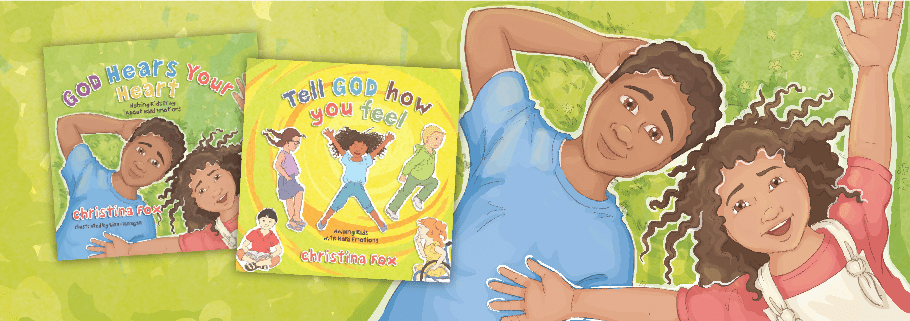
Today’s post is written by Christina Fox and sponsored by Christian Focus. Christina’s new book, God Hears Your Heart follows on from Tell God How You Feel (2021) and encourages children to bring all their feelings to God. Learn more and get both books here.
“Mommy, I’m scared!”
When he was young, my son would seek me out during every thunderstorm. He’d arrive at my side, a favorite blanket wrapped around his head, his body trembling in fear. It didn’t help that we lived in Florida where every summer afternoon the sky lit up and the windows shook so hard, you’d think they would break.
I prayed with him and taught him how the psalmist responded to his own fears by telling God how he felt, asking God to help him, and trusting in the character of God. In doing so, I began to teach him how to lament.
“In the day of my trouble I call upon you, for you answer me” (Psalm 86:7).
We were created as emotional beings; we all have feelings—our children included. While we rightly spend time teaching our children the truths of who God is and what he has done, we don’t often teach our children how to navigate their emotions. We might instruct them not to sin in their emotional responses but are less likely to help them learn what to do when they feel big things.
My children’s book series, Tell God How You Feel and God Hears Your Heart are discipleship tools for parents to use to help guide their children in learning what to do with the hard emotions of life. In these stories, brother and sister Josh and Mia face difficult emotions such as fear, sadness, anger, and failure, and learn to bring their emotions to God in prayer. They learn the art of lament.
In reading these stories to their children, parents are encouraged to have conversations with their children about their feelings and teach them the habit of crying out to God in prayer. Each story in the books covers a particular emotion and the end of each story includes questions for parents to discuss with their children.
Children learn at an early age how to respond to the hard emotions of life. For some, they might learn to distract themselves from those emotions. Others might develop habits of comforting themselves with a temporary pleasure. Still others might push those emotions down, only to have them erupt later. By teaching our children the way of lament—of bringing emotions to the Lord in prayer and seeking his help—our children are equipped to respond to their big feelings in a God honoring way. They learn to see God as their rock, their refuge, and their deliverer in all their troubles. They learn that God is a Father who hears their cries, collect their tears in a bottle, and is their only source of help and salvation.
“In my distress I called upon the LORD; to my God I cried for help. From his temple he heard my voice, and my cry to him reached his ears” (Psalm 18:6).
Do you have children with big feelings? Consider reading the stories of Josh and Mia with them today.