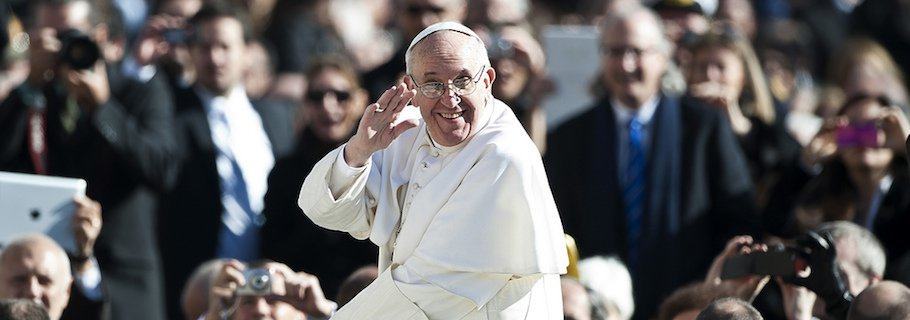
Once there was a boy so meek and modest, he was awarded a Most Humble badge. The next day, it was taken away because he wore it. Here endeth the lesson.” And here endeth the opening quote from TIME’s story to announce Pope Francis as the Person of the Year for 2013. Nancy Gibbs continues:
How do you practice humility from the most exalted throne on earth? Rarely has a new player on the world stage captured so much attention so quickly—young and old, faithful and cynical—as has Pope Francis. In his nine months in office, he has placed himself at the very center of the central conversations of our time: about wealth and poverty, fairness and justice, transparency, modernity, globalization, the role of women, the nature of marriage, the temptations of power.
For all of these reasons and more, he is a natural and obvious choice for this distinction.
The world reacted with shock when, on March 13, Jorge Mario Bergoglio was chosen as the 266th pope. However, through the opening months of his reign, he is proving to be exactly what the Roman Catholic Church needed, even if he wasn’t initially what many Catholics wanted. The church has been hit hard by scandal and by the perception that Catholicism is an ancient and obsolete faith with little ability to speak to modern controversies: homosexuality, female clergy, abortion, contraception, and the like. Francis has breathed life into the church and aroused the adoration of the people he leads.
Francis follows the forgettable Benedict XVI who was more of a scholar than a pope of or for the people. Of course Benedict had the difficult task of following the much-loved John Paul II, a man who casts a long shadow.
Francis has been handed the impossible and unenviable task of representing Catholics on every end of the spectrum, from those who want the church to return to its oldest beliefs and oldest forms of worship, to those who want to liberalize the church and to embrace the spirit of the age in every part. A second article from TIME explains the impossibility of his task despite early success and adulation. He brings hope, but irreconcilable hope, to the “elderly traditionalist who pines for the old Latin Mass and the devout young woman who wishes she could be a priest.” If he succeeds with one, he will necessarily fail with the other. Not surprisingly, he is guarded with his words.
He is quoted saying of women who consider abortion because of poverty or rape, “Who can remain unmoved before such painful situations?” Of gay people: “If a homosexual person is of good will and is in search of God, I am no one to judge.” To divorced and remarried Catholics who are, by rule, forbidden from taking Communion, he says that this crucial rite “is not a prize for the perfect but a powerful medicine and nourishment for the weak.”
Yet even while he has avoided speaking bluntly to many of the most pressing issues, he has been masterful in his actions. “He is photographed washing the feet of female convicts, posing for selfies with young visitors to the Vatican, embracing a man with a deformed face.” He makes full use of new media and does so with skill.
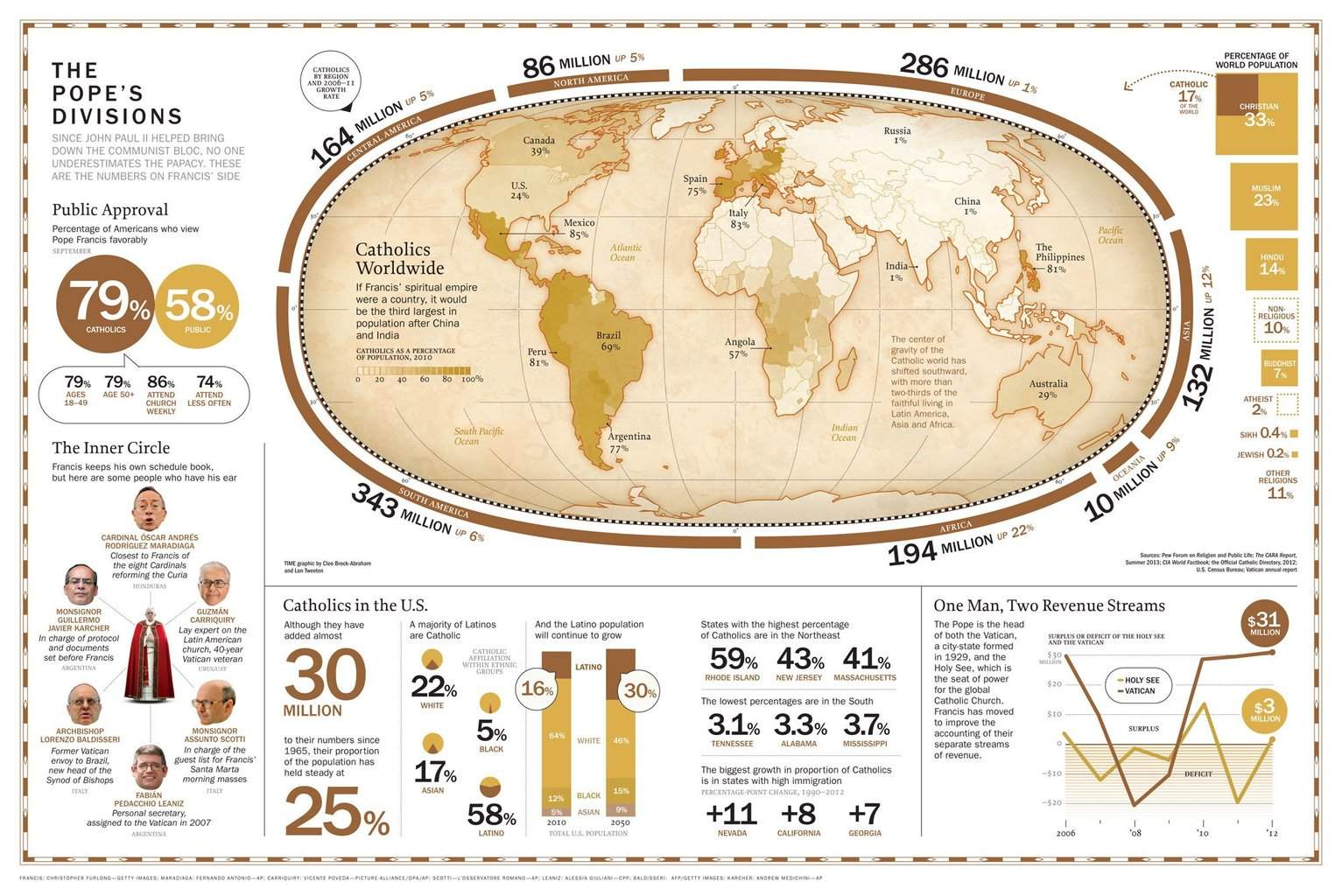
The fact is, Pope Francis has taken the Roman Catholic Church by storm and the whole world is watching. Just yesterday Facebook announced that he was the most talked about topic on Facebook worldwide this year. He is Christendom’s newest and biggest celebrity. His reach, his power, his popularity are unparalleled.
The core doctrine of the church is unchanged, unchanging, and unchangeable.
How are we, as Protestants, to think of this pope? It is easy for us to be swept up in the praise given to Francis, and easy to be impressed by his public acts of faith and humility. Many Protestants see him as an exciting Christian leader and are paying tribute to him. Yet we need to think carefully and discerningly, because what is fundamentally true is this: The Roman Catholic Church is a false church that teaches a false gospel. Rome is semper eadem, always the same, never changing, and her long, long history has proven the validity of this motto. While the face of her leader may change, and while this pope’s actions may appear admirable in many ways, the core doctrine of the church is unchanged, unchanging, and unchangeable.
The Roman Catholic Church remains committed to a false gospel, a gospel of salvation by grace plus works. The core doctrinal issues that divided Protestantism from Catholicism remain. The core doctrinal issues that compelled Rome to issue her anathemas against Protestantism are unchanged. Rome remains fully committed to a gospel that cannot and will not save a single soul. Those within the Roman Catholic Church who have experienced salvation (and certainly there are those who have!) have done so despite the church’s official teaching, not through it.
Good deeds done to promote a false gospel are the most despicable deeds of all.
We who hold to the great truths of the Reformation—the great truths of the Bible—cannot allow ourselves to separate this pope’s actions from his doctrine. Commendable actions can flow from abhorrent beliefs. And, indeed, Francis is the head of a false church that is opposed to the true gospel of salvation by grace alone through faith alone to the glory of God alone. I do not wish to issue a call to hate the pope or his followers, but we do need to despise and reject the falsehood he promotes. Even while Francis washes the feet of prisoners and kisses the faces of the deformed, he does so out of and toward this false gospel that leads not toward Christ, but directly away from him. Good deeds done to promote a false gospel are the most despicable deeds of all. (See The Humble Pope.)
If you have never seriously considered the all-important distinctions between the glorious gospel of grace and the false gospel of Roman Catholicism, make this the occasion! I recommend beginning with R.C. Sproul’s Are We Together?: A Protestant Analyzes Roman Catholicism. Richard Bennett’s Catholicism: East of Eden will also prove a helpful, though slightly longer read, as will James White’s The Roman Catholic Controversy.
Photo Credit: Catholic Church England and Wales.