I am an avid reader of books related to the Second World War. In my estimation, no conflict in history has been more interesting than this one. It has generated a wealth of fascinating stories and riveting accounts of unbelievable heroism. And even though countless thousands of books have already been written, new ones pour off the presses every day. Not nearly all the good stories have yet been told.
Not surprisingly, the vast majority of these stories have recounted the exploits of people who served on the front lines. From them we’ve learned what it was like to be in the skies and on the seas, to command infantry in Europe and serve aboard ships in Asia. Yet behind every soldier carrying a gun, driving a tank, or flying a fighter was an entire network of support personnel. It’s difficult to tally exact percentages, but some estimate that for every man who served on the front lines, there were six or even 12 men and women who served far behind.
The army did not sanction much redundancy, so these “other” roles were neither minor nor unimportant. The soldiers who did the fighting were dependent upon an extensive network of people involved in logistics, transportation, communication, and a host of other crucial functions. Some of those who served in this way remained in their own countries to recruit and train new soldiers. Some repaired roads or ferried aircraft from factories. Some drove trucks filled with fuel or piled high with ammunition while others piloted transport planes or crewed supply ships. In the end, victory was not won by the nations with the fiercest soldiers or the best tactics, but the nations best able to provide and maintain the tools of war.
We Christians love our missionaries, and for good reason. This is especially true of the missionaries who have the most obvious teaching and preaching ministries. They are the equivalent of our front-line troops, the ones who respond most obviously and urgently to the marching orders of Matthew 28: “Go and make disciples of all nations.” For 2,000 years we’ve watched with admiration and sometimes a little bit of awe as they go, as they forsake comfort and security for the sake of the call. We love to hear the stories of how they’ve confronted the enemy by preaching the gospel and how the enemy has given way before the weapon of God’s Word.
Behind those missionaries are support-raisers, graphic designers, videographers, accountants, and a host of others.
Yet these front-line missionaries, like front-line soldiers, are dependent upon a substantial network of support. They can only go where others prepare them to go and they can only stay where others equip them to stay. Behind those missionaries are support-raisers, graphic designers, videographers, accountants, and a host of others. Though these people have far less contact with the “enemy,” they are still crucial. Though they may remain in their home country, the missionaries on the front line could not thrive or even survive without them.
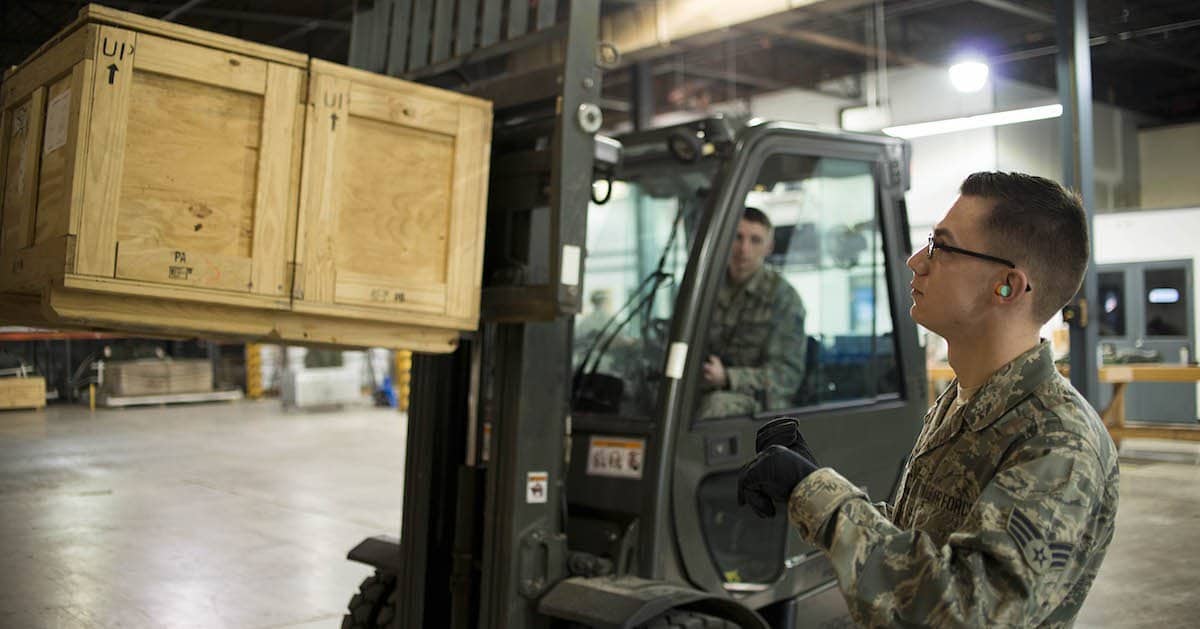
Here is something to consider: If soldiers and other military personnel were responsible for raising their own funds, who would you be most likely to support? Would you give to the guy driving the tank or the guy driving the forklift? The guy carrying the rifle or the guy carrying the clipboard? In most cases, you would probably want to give to the people closest to the action. Yet we know that those other positions are equally crucial—even those positions that provide few stories and generate few books. It is much the same with missionaries. We need to consider not just the people landing in far nations and speaking to unreached people, but also the many who stand behind them and enable their work.
So let’s make this a call to honor the people who serve far from the front lines. When we thank soldiers for their service, we do not withhold honor from the ones who haven’t ever fired a rifle in combat. Rather, we extend honor to all of them, knowing that every soldier plays a crucial role in the functioning of the army. They serve together. When we thank missionaries for their service, we should not withhold gratitude from those who serve in support roles. Each of them is every bit as called as the ones who go to plant new churches and win new converts.
And let’s make this a call to consider supporting some of these people in addition to, or perhaps even in place of, the front-line missionaries. An army without supplies and transportation is an army that will soon be surrounded, defeated, and destroyed. A missionary without a network of support is a missionary who cannot long survive. They serve together.





