A little while ago I wrote You May Not Need Nearly as Much House as You Think You Do. The purpose of that article was to help people consider that they may be able to live in a much smaller house than they think they can. Housing in my area and many others has gotten far more expensive over the years, and I have known many people who have become “house poor” by continually upsizing. Yet my family and many others can attest that it is possible to live contentedly in a relatively small home.
I can say this because we have only ever lived in a little townhouse that is just about 1,200 square feet. Though we assumed this home would be just the first step up the property ladder, we could never make the numbers work when we considered upgrading. We ended up just staying put, and have now been here for more than 20 years. Almost before we knew it, the kids grew up and moved out, and now this house is almost too big for just the two of us. It isn’t well suited to old age, so we will need to move on eventually, but for the time being we plan to remain here.
After I wrote that article, I received a few questions about life in a smaller home, and especially about extending hospitality. For obvious reasons, hospitality can be more challenging for those in a small home than for those in a much larger one. It can be a bit more awkward, too. Yet I’d like to think we have generally been faithful in that regard. Obviously the size of our home has limited the number of people we can host at any given time, but it has not kept us from inviting people in, whether for a meal, a day, or several nights. Just the other day we had 10 people for dinner, which means the table stretched from the wall of the dining room all the way into the living room. It was tight, but that’s okay. We’re used to it.
So here are some tips.
First, don’t be ashamed of your house. We are all prone to judge one another by visible symbols of wealth like cars, clothes, and houses, and we knew that people would draw conclusions about us based on the size of our home. But we understood this to be the Lord’s provision for us and never wanted to be ashamed of what he provided. So we chose to be as thankful for our small house as anyone could be of their big one, and every bit as unashamed of it.
Second, buy a table that can be extended. Years ago, we found a great table in IKEA’s as-is section that was the least IKEA-like table we had ever seen there. It was solid and heavy and nice, and just happened to come with six chairs. We scooped up the whole set, loaded it into our van, and have had it ever since. It seats six most of the time, but can be extended to seat 10 comfortably or 12 not entirely comfortably. It has been ideal for us.
Third, don’t buy high-end furniture. I say this because sometimes extending hospitality may mean you overflow your table and people will need to eat on the couch or chairs. That’s harder to be relaxed about if you have high-end furniture, so we stuck with low-end when we were young and mid-range as we got older and more established. We’ve had a few spills along the way, but that’s just the cost of hospitality.
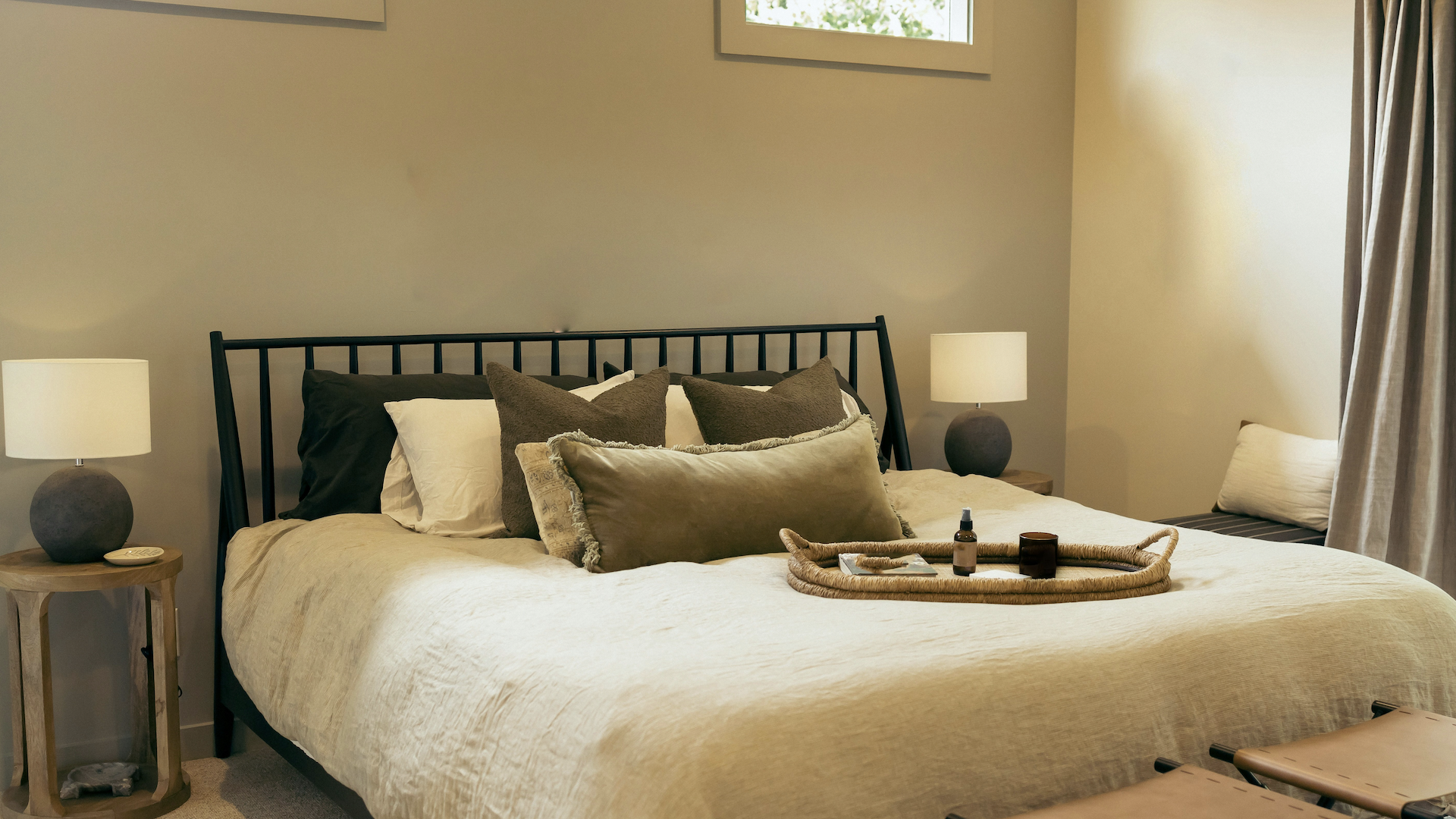
Fourth, try to have at least one room in the house that can sleep guests. For us, this meant that one of our children would have a queen-sized bed but be displaced when guests stayed with us. That seemed like a reasonable trade-off. As the kids moved out and we had more available space, we turned our finished basement into a “guest suite” that has a bed, a couch, and a bit more room and privacy. It doesn’t have a bathroom, but we may try to add one in the future. We now also have a guest bedroom upstairs so we can easily sleep four to six guests.
Fifth, when you have more guests than your home can hold, ask nearby friends whether they can host the overflow. We have often had friends offer a bed or two and have taken them up on that. There’s no reason that hospitality can’t become a community project!
Sixth, keep food relatively simple. Learn the meals you can make that will suit a crowd and fit within your budget. Treat people with respect and as honored guests, but don’t feel the need to wow or impress them.
It is a blessing to invite people into your home and a blessing to be able to make them feel welcome and loved.
Seventh, be okay with having other people living in close quarters. That means your normal patterns may be disrupted, you may be kept up later or woken up earlier than you would like, and you may not be able to get into the bathroom when you want to get into the bathroom. It may be difficult at times and awkward at others. But that’s okay—no one ever said hospitality would be easy and, in fact, I’m quite sure that the difficulty is part of the point of it. There’s a reason that Peter says “show hospitality to one another without grumbling” (1 Peter 4:9). Content yourself in knowing that you are doing what the Lord calls you to do by extending hospitality to others.
Finally, just enjoy it. It is a blessing to invite people into your home and a blessing to be able to make them feel welcome and loved. Make it your goal that they will never feel like a burden and only ever feel like a blessing to you and your family.
Whether your home is large or small, you are responsible before the Lord to make it available to others (Romans 12:13; 1 Timothy 5:10; Titus 1:8; Hebrews 13:2; 1 Peter 4:9). After all, it is not actually your home, but the Lord’s. He has simply entrusted it to you and now holds you responsible for using it well. You can use it well by opening it up to family, friends, and strangers alike, then showing them the same kind of love that the Lord has shown you. A small home may limit some of the ways you do this, but it must not prevent you from doing so altogether.