As another year draws to a close, I wanted to take some time to consider the books I read in 2025 and to assemble a list of my top picks. Apart from the first book, which I consider the best (defined as the most helpful to me and my life) I read this year, the rest are in no particular order. In each case I’ve included a brief excerpt from my review. You can read my reviews of these books and many others here.

Not Old, Not Young, Not Done by Christopher Ash. I am about to turn 49, and a few months later, Aileen will turn 50. But these are just numbers, and already we have a deep awareness that we have entered into this afternoon of life. Already, we are seeing how different our lives have become, and already we are grappling with new challenges and embracing new opportunities. This book has offered us exactly the guidance we needed to face these challenges and opportunities well. I didn’t know how badly we needed Not Old, Not Young, Not Done, nor how much we would benefit from reading it together. I highly recommend it to anyone else who is already in the afternoon of life or who will soon be. I have every confidence that you will enjoy it as much as we have. (Buy it at Amazon or Westminster Books or read my review)

Walking Through Deconstruction by Ian Harber. Harber wants Christians who are witnessing a loved one beginning to deconstruct their faith to withhold panic and to ensure they do not respond with unnecessary fear or harshness. Instead, he wants them to prove trusted friends and a non-anxious presence in their life, to remain engaged and available, and to prayerfully seek God’s grace. He ultimately wants them to trust that God can work great good as people pass through a severe testing of their faith. ‘Deconstruction is a messy and complicated process. My hope is that you are equipped for all kinds of different situations at the end of this book. Our goal is to faithfully walk alongside our loved ones who are deconstructing their faith and surrender ourselves as an instrument in God’s hands, praying for the renewal of their faith.’ (Buy it at Amazon or Westminster Books or read my review)

The Tech Exit by Clare Morell. I have often been grateful that I grew up in a pre-smartphone era and also grateful that my children grew up at least a bit ahead of the worst of it. I have great sympathy for parents who are navigating the challenges today and am hopeful that many of them will choose to adopt a Tech Exit kind of lifestyle. Morell’s book will provide a helpful explanation of the benefits of such a lifestyle and offer a trusted pathway to implementing it. I highly recommend that parents give the book a read and give the strategy a shot. (Buy it at Amazon or read my review)
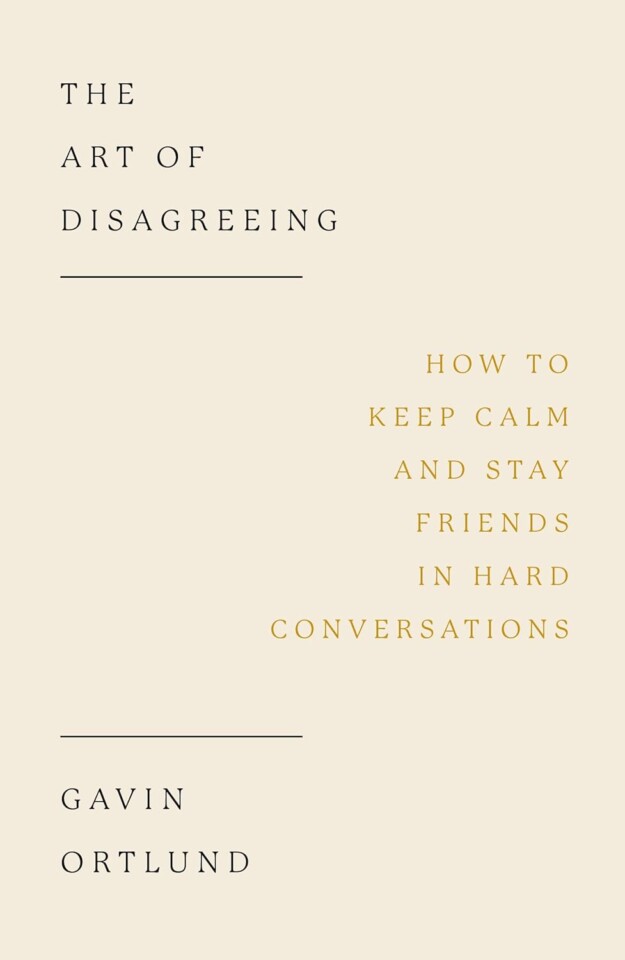
The Art of Disagreement by Gavin Ortlund. It is hard to disagree with someone you love. It is harder still to disagree well—to retain genuine respect and true friendship despite differing opinions or convictions. And, as we all know by experience, there is just so much to disagree about. I am tempted to say that today’s world gives us more to disagree about than at any other time in history. But I actually doubt that’s the case, for fallen humanity has always been disagreeable and always will be until the Lord returns. Until then, we can serve him best by disagreeing well. That is to say, we can serve him best in our disagreements if we follow the wisdom of a book like this one. (Buy it at Amazon or Westminster Books or read my review)
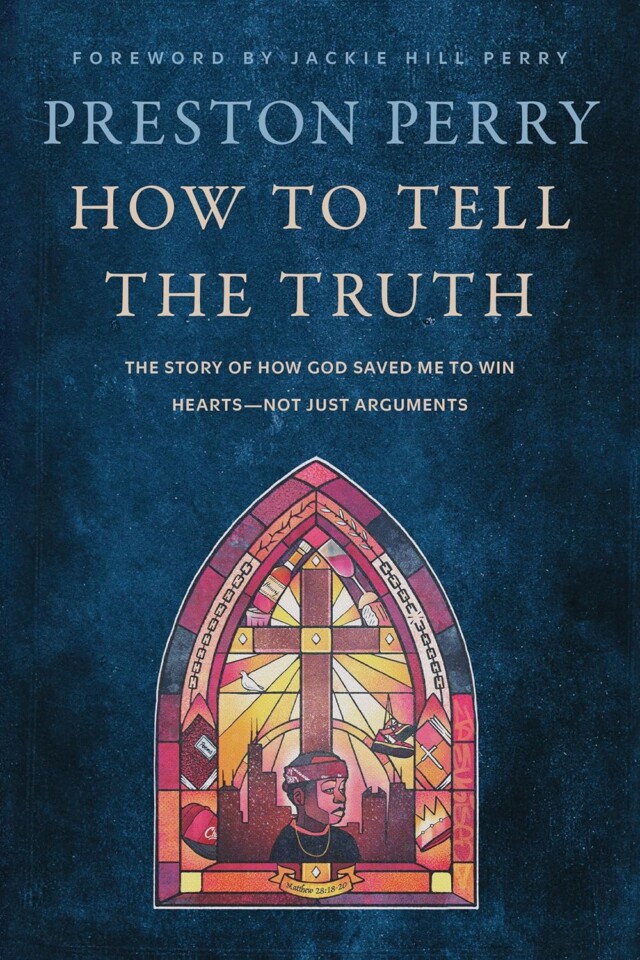
How To Tell the Truth by Preston Perry. That kind of apologetics, the kind that combines truth and love, that honors Christ while attempting to persuade another person, becomes the theme of his book. While the book remains biographical, it begins to teach both the why and how of sharing the Christian faith. It includes calls to become active in the task and calls to remain active in it, even when faced with rejection or discouragement. It includes calls to boldness, since ‘the way I see it, boldness isn’t about doing what you are afraid to do. It’s about doing what God is telling you to do. Boldness is more about obedience to God than being fearless before people. If we are convinced that God is someone worth following and obeying, please believe he can give you the boldness to say yes to him, even when it might cost you something.’ (Buy it at Amazon or read my review)

How To Teach Kids Theology by Sam Luce & Hunter Williams. Sam Luce and Hunter Williams, provide both the big-picture vision and the practical pointers that could transform any children’s ministry. They steer readers away from the allure of ministries that are fun and attractive but devoid of significant content, for “Unless God is rightly taught and highly honored, our ministries are nothing more than glorified babysitting services.” Yet they also know the importance of making learning age-appropriate and enjoyable. “God should be the goal and prize of our ministries! Teaching about him should be the most exciting thing we do. Kids can love the activities we create and enjoy the snacks we supply, but they especially should look forward to the times when God is taught. Seeing him should be the most exhilarating thing they experience.” (Buy it at Amazon or Westminster Books or read my review)

Managing Your Households Well by Chap Bettis. The Bible lays out a whole list of qualifications that must be present in the life of a man who wishes to be a pastor. He must be the husband of one wife, he must be a lover of good, he must be hospitable, and so on. Meanwhile, he must notbe arrogant, quick-tempered, violent, or a drunkard. It is no small thing to pastor God’s church and it stands to reason that the qualifications would be exacting. Yet for all of the qualifications we take seriously, there is one that so often seems to be overlooked: He must manage his own household well. I suspect most of us have known pastors who were capable preachers and perhaps good at motivating a group of people to follow, yet whose home life was chaotic. (Buy it at Amazon or Westminster Books or read my review)

The Good Investor by Robin John. I found The Good Investor a deeply challenging book and one that is going to demand a response from me, though I have not yet decided what that response will be. I need time to let it sit and percolate, and need time to apply its lessons. But I am eager to take action on its main point—that my investments, paltry though they may be, must not inadvertently be a means of doing evil in the world, but can and should be a means of doing good. And how much better could it be if those who are committed to a better world take their capital away from businesses that are bringing harm and direct it together to those that are doing good? It is a joy to imagine what we could accomplish together. (Buy it at Amazon or read my review)

Disrupted Journey by Nate Brooks. I am convinced it is appropriate to acknowledge those who bear with chronic pain and illness and that it is especially fitting to give special honor to do those who do so with a deep sense of submission to God’s mysterious purposes in their suffering. But if that’s true, I believe it is also appropriate to give honor to those who walk with them and care for them. As much as we acknowledge the difficulties inherent in chronic pain and long illnesses, we also need to acknowledge that suffering is never only personal. Rather, suffering extends outward to spouses, family members, and other caretakers. They, too, deserve recognition and they, too, need support. (Buy it at Amazon or Westminster Books or read my review)

A Light on the Hill by Caleb Morell. I love a good biography. It’s always fascinating and often inspiring to read the account of a life of special significance. Yet for all the biographies I’ve read, A Light on the Hill may be the first whose subject was not a person but a church. It surprised me what a blessing it was to read about that church and to see how God has seen fit to bless, preserve, and use it for so many years. (Buy it at Amazon or Westminster Books or read my review)
A Bonus

It seems fitting that I give a special mention to a resource that’s perhaps not quite a standard book but still quite an accomplishment in its own right: The Sing! Hymnal by Getty Music. It is a great product and one that may have its place in personal devotion, family worship, and the corporate gathering. There is probably not a human being on earth who will agree with every song that was included and omitted, but that is inevitable for any collection. And every hymnal gets revised eventually, so it is probable that through the decades, some selections will be added and others removed. In that way, I take this to be the beginning of a living, still-to-be-curated collection. (Buy it at Amazon or Westminster Books or read my review)