This sponsored post, a Q&A with Trevin Wax, was provided by the Christian Standard Bible.
People care greatly about their Bible translations. Some believe there is only one “right” translation. Others, even those sitting next to you in church, may not have a grasp on the differences between all the Bible translations.
Trevin Wax, author, pastor and Bible publisher, talks at length about short-comings he sees in most Bible translations and why he’s both preaching from and giving away the Christian Standard Bible (CSB).
If you’d like to read the CSB for yourself, you can download the free app from the iTunes or Google Play stores. You can also read it online or find it on your favorite Bible platforms.
Why have you embraced the CSB?
As a pastor, I’ve often found myself in a struggle when it comes to recommending a translation to new Christians or younger people. They need a translation that is clear and understandable. Yet I want to recommend a translation that is also reliable and faithful, one that I believe is strong enough to preach and teach from. In the past, I’ve chosen to recommend one translation for those in the pews and a different translation for those in the pulpit. Now I can recommend the same translation for both groups: the Christian Standard Bible.
Why do you feel this clarity and reliability is part of the CSB?
I am confident in the CSB’s accuracy and precision. It is a text I can use for sermon preparation and serious Bible study. Yet I am also confident in the CSB’s readability. Because it is clear and easy to read, I can share it with people who are new to the Word of God as well as those who are already regular Bible readers.
In your opinion, what makes the Christian Standard Bible good for use as a preaching text?
When I stand up to preach, I feel the weight, responsibility, and the privilege of my call. I want to use a translation that accurately reflects the words and meaning of the original. The CSB is a highly accurate preaching text, translated directly from the best available Hebrew, Greek, and Aramaic source texts into English by biblical scholars who affirm the authority of Scripture as the inerrant Word of God; its source texts are the standard used by scholars and seminaries today. The text is not only highly accurate, it’s also remarkably clear; the CSB has been proven to optimize both accuracy and readability, making it accessible for your church members to also read on their own and to share with others.
Tell us a bit about the translation committee and why that was important for the CSB?
The CSB Translation Oversight Committee, a team of top biblical scholars across the globe, includes scholars from a variety of denominations including Baptist, Presbyterian, Anglican, Lutheran, and non-denominational backgrounds. Working directly from the original languages, they also solicited feedback from pastors, seminaries and other conservative denominations. Of note were the committee co-chairs – Tom Schreiner is well-known as the Associate Dean of Theology at Southern Seminary. His other co-chair – David Allen is beloved at Southwestern Baptist Seminary for his preaching classes. The CSB has those distinct readers in mind – the theologian, the preacher, and the person reading the Bible at home.
How does the CSB compare to other translations?
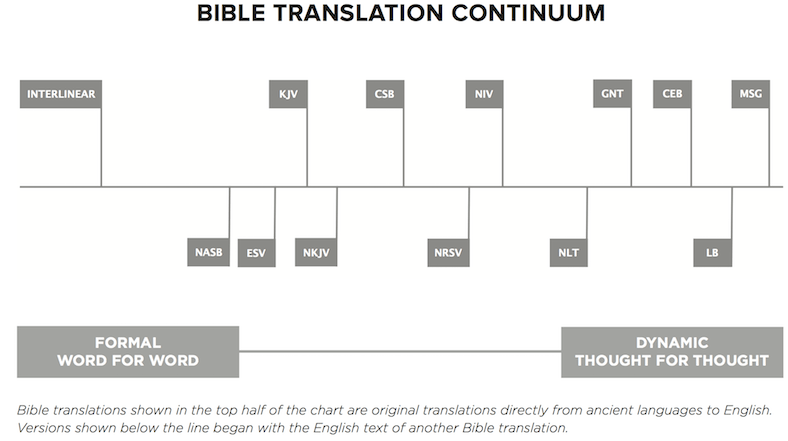
I think the CSB lands in the sweet spot between the more formal (“word-for-word”) translations and more dynamic (“thought-for-thought”) translations. And it is not just my opinion, but independent analysis has proven that the Christian Standard Bible is the optimal combination of fidelity to the original languages and readability for a modern audience. The CSB was created using a methodology called Optimal Equivalence, which balances contemporary English readability with linguistic precision to the original languages, making it ideal not only for preaching and study, but for sharing with others.
Learn more about the CSB at CSBible.com.