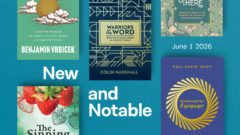
With the year halfway over, I thought it would be a good time to pause and consider the books I have read so far in 2026. Plus, I thought you might be looking for something to read through the summer. To that end, here are three suggestions from the Christian market and three suggestions from the general market.
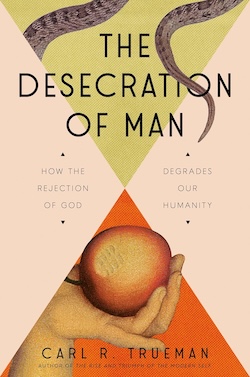
The Desecration of Man: How the Rejection of God Degrades Our Humanity by Carl Trueman. Like me, you may have asked yourself questions like these: Why does so much of popular entertainment today involve mocking and belittling the Christian faith? Why is there such a desire to violate and trample upon Christian ethics and morality? Why would the opening ceremonies of the Olympics feature a lurid, transgender version of the Last Supper designed specifically to be contemptuous and offensive? Why would so many people advocate that mere children be exposed to drag queen story hours? Why has abortion advanced from a rare but unfortunate option to an event to be celebrated and boasted of? These are the kinds of questions Trueman addresses in The Desecration of Man. If you have read his previous works like The Rise and Triumph of the Modern Self or To Change All Worlds, you’ll find that The Desecration of Man advances many of his arguments. If you haven’t read them, it won’t make it any harder to enjoy this new book, but it may motivate you to go back and read the older ones.
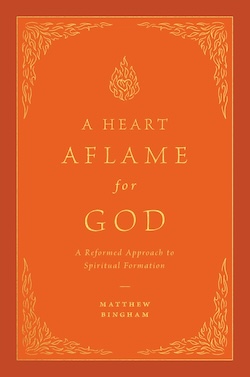
A Heart Aflame for God: A Reformed Approach to Spiritual Formation by Matthew C. Bingham. A Heart Aflame for God is a book about spiritual formation, which is to say, a book about the Christian life. “A basic biblical assumption about the Christian life is that it ought to be a growing life. When the Bible describes walking with God, the expectation is that it will never be a static, settled affair but rather a journey characterized by continual development, increase, and forward movement.” Of course, there are many books on this subject, so what makes this one different? “What distinguishes our interest in spiritual formation from other books discussing the same is that here we are working to understand what spiritual formation sounds like when set in a distinctly Reformed-evangelical key.” At a time when many Protestants seem to be taking their spiritual formation cues from other traditions, Bingham shows that Reformed Protestants already have a deep, compelling, and satisfying tradition to draw upon.
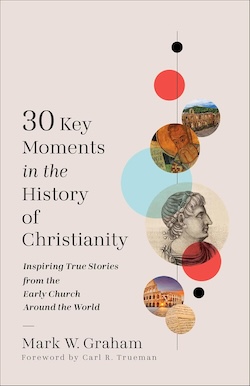
30 Key Moments in the History of Christianity: Inspiring True Stories from the Early Church Around the World by Mark W. Graham. I found the premise of this book very interesting and enjoyable: it gathers stories from early Christianity that span the world. Graham begins at the end of the Apostolic era and closes 900 years later, just around 1000 AD. The joy of 30 Key Moments in the History of Christianity is that it introduces a period of history most Christians know little about. Even Reformed Christians, who tend to put a premium on knowledge of church history, still often skip quickly from the Apostles to the Councils to the Reformation (probably also pausing to cover Huss and Wycliffe). Yet, as Graham so aptly points out, there are many of “Our People” (the endearing term he uses throughout) in the first millennium whose stories we ought to know. And to our surprise, we will find they existed “on the shores of the Black Sea, the Red Sea, [and] the Mediterranean Sea, [and] deep in the Middle East, Britain [and] China.” It is well worth a read!
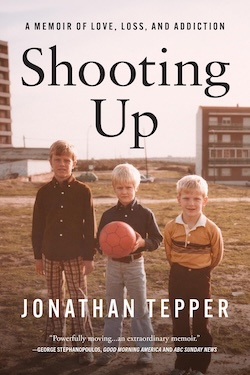
Shooting Up: A Memoir of Love, Loss, and Addiction by Jonathan Tepper. Shooting Up is not a Christian book. At least, it is not published by a company that focuses on publishing books by Christians or for Christians. It is not written by an author who professes faith in Jesus Christ, though he used to. Yet in its own way, it is as Christian a book as I’ve read this year. It is as enjoyable a book, too. Jonathan Tepper grew up the son of missionaries to Madrid, Spain. Elliott and Mary Tepper had been sent by their Presbyterian Church in the States to found a ministry to young intellectuals that may have been somewhat in the vein of the Schaeffers’ L’Abri. When that ministry failed to thrive, they changed their focus to reaching heroin addicts. Tepper tells the story of his parents, their family, and the many people the ministry reached and saved. It is poignant, compelling, and at times heartbreaking. I thoroughly enjoyed it and think you will too.
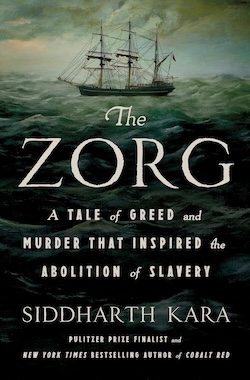
The Zorg: A Tale of Greed and Murder That Inspired the Abolition of Slavery by Siddharth Kara. The Zorg tells the story of one of history’s most notorious and influential slave ships. The ship ran out of drinking water as it neared the Caribbean, so the owners decided to jettison slaves overboard to save themselves. When they returned to England, they had the audacity to file an insurance claim for lost property. This claim went before the legal courts and, more importantly, the court of public opinion. This sparked outrage and began a process of change that would eventually lead to the end of slavery in England and beyond. Though not a Christian book, you’ll be proud to read of the Christians who led the way in this noble fight for justice. It reminds me that we are well overdue for fresh biographies of Thomas Clarkson or Granville Sharpe. We have many books about Newton and Wilberforce, but could use some about the other two!
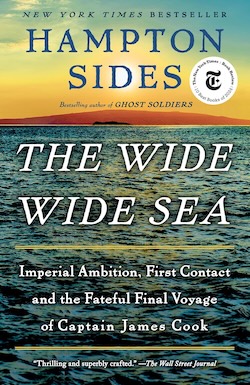
The Wide Wide Sea: Imperial Ambition, First Contact and the Fateful Final Voyage of Captain James Cook by Hampton Sides. This is a riveting account of Captain Cook’s fateful third voyage around the world—an attempt to discover the fabled Northwest Passage. It transports the reader back to an age of discovery when Europeans were exploring the world and, at times, exploiting it. This, like Sides’ other books, is a joy to read and comes highly recommended. Once I began reading it, I couldn’t put it down! The author is at times a bit antagonistic or sarcastic toward Christianity, as if missionaries were wrong to come to French Polynesia specifically to combat the practices of infanticide or human sacrifice. Like so many authors, he seems to need to briefly air his anti-Christian credentials and can then move on. But that antagonism is easily set aside to simply enjoy the riveting—and at times disturbing—narrative.
If you are looking for some other general market summer reading, consider:
- Rick Atkinson’s Liberation Trilogy, which covers America’s involvement in the European front during the Second World War.
- Neptune’s Fortune, an account of shipwrecks and those who try to find them centuries later.
- Sister, Sinner, a biography of one of Christianity’s strangest characters, Aimee Semple McPherson.
- Rasputin, a biography of one of history’s shadiest characters.
- Everybody Loses, an account of the rise of sports gambling and an explanation of the damage it is doing.