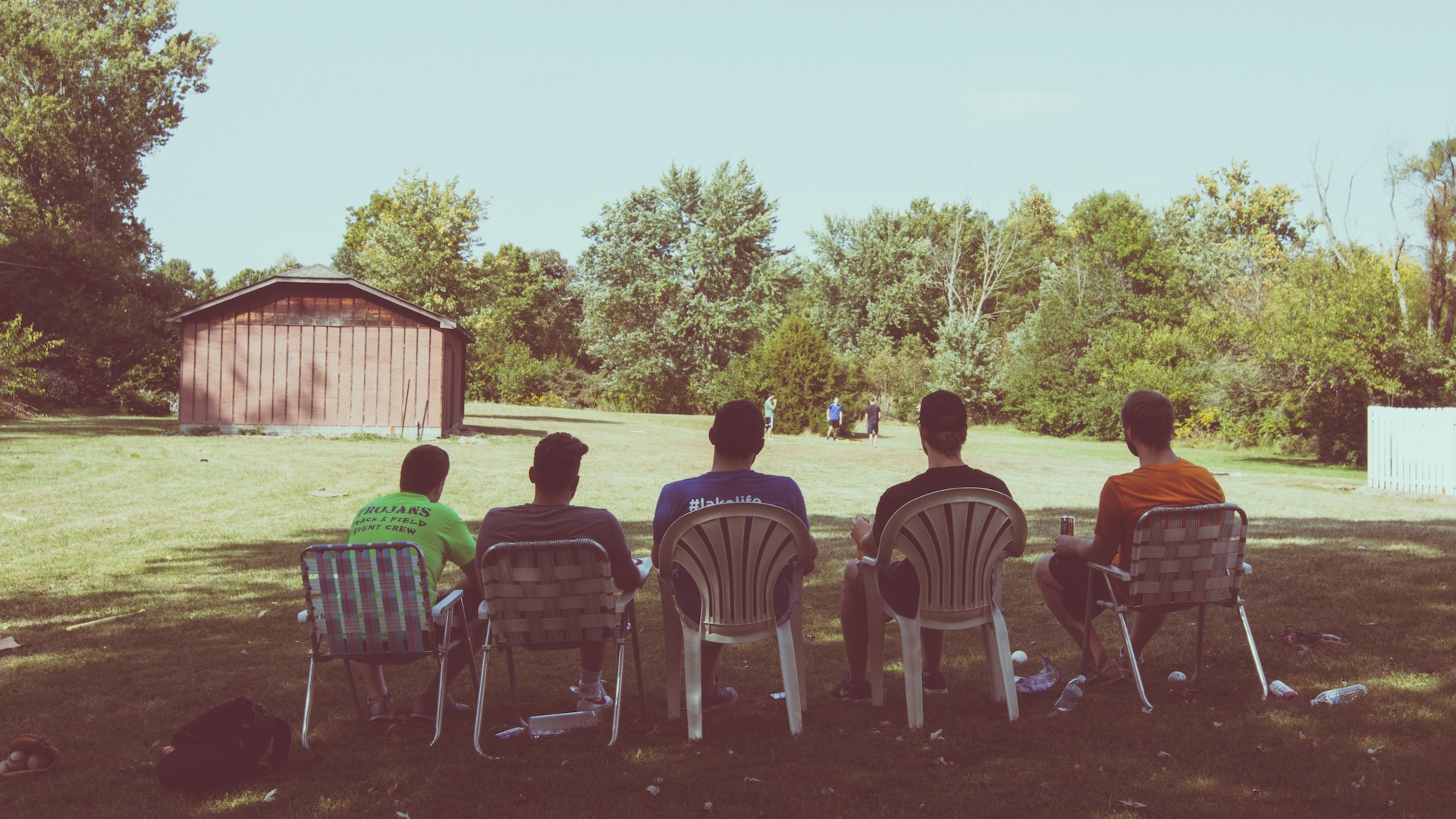
You have probably heard it as many times as I have: many men have trouble making friends. It’s not that there is anything intrinsic to masculinity that makes men unwilling or unable to form and maintain friendships, yet somehow it seems to be more than a cliché that many men struggle this way. That struggle is in the background of Alasdair Groves’s new book Talk About What Matters Most: A Christian Man’s Guide to Forging Friendships.
Groves is convinced that most men want to have friendships, but simply lack some of the skills or commitments they need to make them happen. “We live in the most isolated and isolating culture in the history of mankind. Men in particular are more disconnected from genuine friendship with other men than ever before. Most men sense there must be something out there better than this. They know, even if only faintly, that they were made for deeper friendships. Yet, increasingly, men don’t know how to move toward the kind of connection they hunger for.”
So what’s the key to forming deep friendships? It’s the title of the book: talk about what matters most. “Yes, that’s it. The path to friendship begins with finding the courage to talk with other men about the things you care most deeply about. Doing so will not only empower you to grow into the man God is calling you to be, but it will also bind you together with brothers in the fight. When men begin to talk to other men about things that matter, they discover an untapped reservoir of oil that has been lying right in the backyard of their lives. I’ve never seen a man discover that reservoir and then return to a life without it. I know I never will.”
The purpose of his book, then, is to help men learn to form friendships around conversing over the things that matter most in life. Though the book is relatively short, it is divided into five parts.
In part one, Groves casts a vision for why men should put in the effort and take the risk of talking about what matters most. In other words, he explains why it is so important that men learn to converse with one another about deep and meaningful matters. The main reason is that we are all engaged in a battle against sin and we have a desperate need for others to fight alongside us. Besides that, words are powerful and important and, in their own way, shape our reality and change other people. We do well to enlist a “band of brothers” who will assist and bless us.
In part two, he identifies some of the barriers that hold men back from deep engagement with one another. So why don’t men talk about what matters most? There could be many reasons: talking seems weak; we are too busy or too distracted; we fear rejection; we fear the discomfort that could come with opening up our lives; and so on. While all of these can be legitimate barriers, we must not allow them to prove insurmountable.
In part three, Groves explores what God sees as most important, what most men see as most important, and how those things can and should intersect. What matters most to God is his own glory. Of course, that should be what matters most to us as well, and if it really does, we will be willing to do things that are difficult or uncomfortable in order to further God’s glory.
In part four, he lays out the practical measures for talking about what matters most. Here he describes the elements of good conversation, he tells how to become a good listener, he promotes the value of curiosity, and he explains how important it is to confess sins to one another and to learn to pray for one another.
In part five, he continues the practical instruction, focusing on how to get started by reaching out to people you already know, meeting people in new contexts, or beginning groups specifically for men.
I agree with Groves’s assessment that many men put too little effort into building and maintaining friendships and that while most men want to have more and better friendships, they simply don’t know how to make that happen. Talk About What Matters Most diagnoses the cause and prescribes just the right cure. I hope many men will read it, either alone or with a group, and learn from it how they can be the kind of friend they’ve always wanted to be and foster the kind of friendships they’ve always wanted to have.