| This page is current as of September 2026. For recommendations on other books and an introduction to this series, visit Best Commentaries on Each Book of the Bible. |
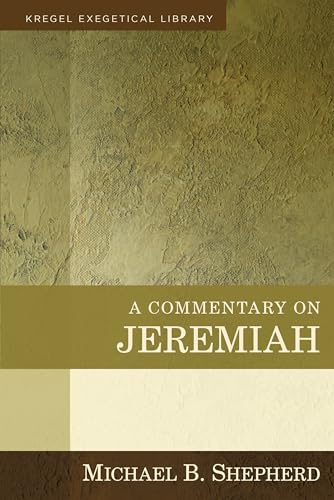
Danny Akin does not hedge: “This work by Michael Shepherd is certain to become a standard in the study of the text of Jeremiah. It is magisterial in the depth and breadth of its scholarship.” One caveat belongs up front: Shepherd comments on the shorter Hebrew text that stands behind the Greek translation of Jeremiah—a defensible scholarly judgment, but one that makes this a commentary for the study desk more than the pulpit. For serious students of the book, it is the most significant thing published on Jeremiah in years.
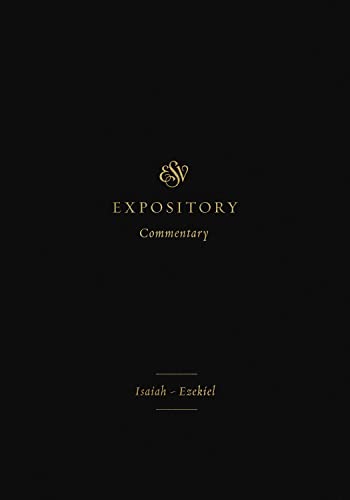
Jerry Hwang’s treatment of Jeremiah occupies much of this hefty volume, which also gives you Bob Fyall on Isaiah, Jonathan Gibson on Lamentations, and Iain Duguid on Ezekiel—four prophets, four trustworthy guides, one volume built for preachers. For most readers this is the practical first purchase among the newer options.

It appears that Jeremiah is not one of those books where there is clear and unanimous consensus on the top commentary. However, with that said, most of the experts, and especially the more conservative among them, do commend Thompson’s work. It contains detailed historical and exegetical examinations of the book and is suitable for pastors, scholars and general readers alike. It seems like it is as good a place to begin as any. Note that Eerdmans has now replaced Thompson in the series with John Goldingay’s 2021 volume—a “landmark commentary” in one reviewer’s estimation, though Goldingay writes from a broader evangelical position than most of the authors recommended here. Thompson remains the safer conservative choice; Goldingay the more current one.
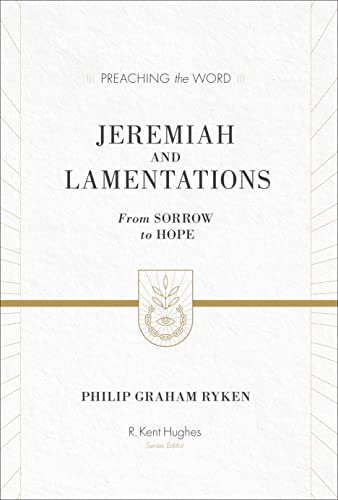
Ryken’s commentary is based on a sermon series he preached through the two books of Jeremiah while senior pastor of Tenth Presbyterian Church in Philadelphia. His theological perspective is distinctly Evangelical and Reformed. Derek Thomas considers it “a superb expositional commentary” and points out that it includes a helpful index of sermon illustrations. Because it is based on sermons, it would make an ideal resource for someone interested in exploring the book devotionally.

Lundbom’s massive three-volume work will satisfy those who are looking for an exhaustive treatment of Jeremiah. Keith Mathison recommends it as “a treasure trove of valuable information.” He goes on to say, “The first volume contains a lengthy introduction dealing with the standard introductory issues of composition and context. Lundbom also deals with the theology of Jeremiah in this introductory section. The bulk of the three volumes is devoted to commentary on the text. Lundbom approaches Jeremiah’s work section by section, with detailed notes as well as section summaries.”
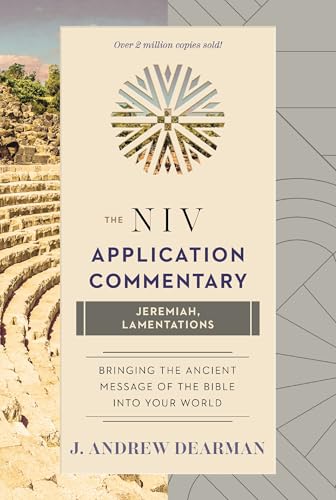
While the NIVAC is an uneven series, the volume covering Jeremiah and Lamentations is regarded as a sound choice for any reader, but especially the more general reader. Tremper Longman says it reflects, “A very sensitive theological reading that also brings these two books into touch with the contemporary world. In keeping with the series, Dearman does not deal with technical issues.”
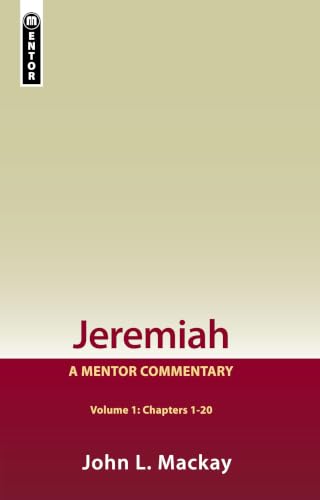
The Mentor series regularly receives accolades from conservative and Reformed commentators on the commentaries, but seems to be overlooked entirely by others. Still, Mackay is regarded as an excellent expositor and his two-volume treatment of Jeremiah will prove helpful to anyone who plans to preach through the book. It will be more detailed than some general readers will want, but still not too dense.
Which one is for you?
| Serious study | Shepherd (Kregel Exegetical Library); Mackay (Mentor Commentary) |
| Preaching a series | Ryken (Preaching the Word) |